Building a Society Where Every Ability Counts: Reflections on the International Day of Persons with Disabilities 2025
Introduction
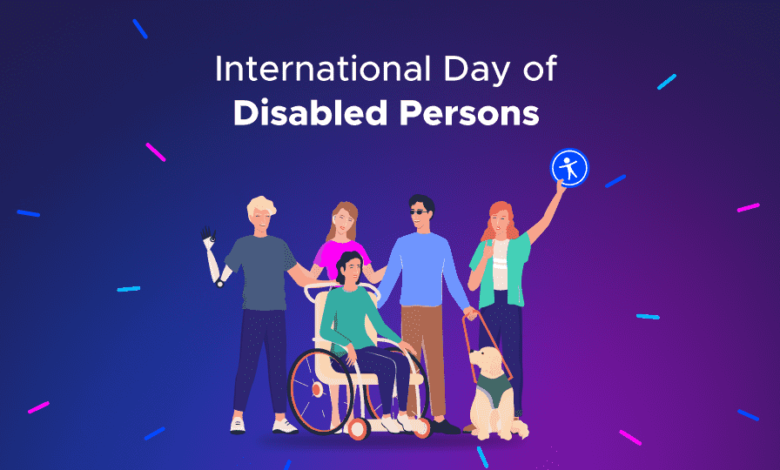
The International Day of Persons with Disabilities, marked each year on 3 December, offers a moment for countries and communities to examine how well they protect the dignity and rights of persons with disabilities. The 2025 theme, “Fostering disability-inclusive societies for advancing social progress”, captures the heart of this reflection. It calls for societies that welcome difference, support families, and remove the barriers that limit learning, participation and opportunity. It is also an invitation to recognise ability wherever it appears and to strengthen the systems that help it grow.
A Call to See Ability and Human Worth
Public conversation often treats disability as a limitation, yet lived experience shows something quite different. Individuals thrive when they are encouraged, understood and granted space to develop their gifts. To foster an inclusive society is to recognise talent, creativity and personal resilience in every child and adult. It means designing environments where people can move freely, learn effectively, work with dignity and take part in community life without unnecessary restriction.
The theme for this year reminds us that inclusion is not an act of charity. It is a necessary part of any society that hopes to advance. When the voices and experiences of persons with disabilities are respected, communities draw on a wider range of insight, industry and imagination.
Gaps That Slow Progress
Although global commitments exist, families in many regions continue to face these challenges alone. Social services remain limited, especially for children with disabilities. Reports show that children and adults encounter barriers in health care, education, employment, transport and digital access. These are not inevitable outcomes. They reflect choices made by institutions and leaders.
The family stands as a child’s first ring of protection. Communities, states and international partners form the rings that follow. When these outer rings fail, families struggle under the weight of responsibilities that should be shared. Parents of children with disabilities often carry this weight in silence and without support.
Beliefs That Harm and Practices That Hide Children
In several societies, especially across parts of Africa, disability is still viewed through the lens of superstition or fear. Some believe it to be a punishment. Others see it as a spiritual problem or a mark of shame. These beliefs lead to harmful behaviour that denies children their basic rights.
Education does not always correct these attitudes. Even in cities and affluent communities, children have been hidden for years because families fear judgement. Such cases show that progress depends not only on schooling but on a shift in thinking that values people for their humanity rather than their conformity.
The Problem of Invisibility
A major reason for ongoing neglect is the lack of accurate data. Many countries do not know how many children live with disabilities, what support they require or how their conditions affect their daily lives. This invisibility shuts children out of services that belong to them. It also reinforces the idea that their needs do not matter.
Research shows that children with disabilities face a higher risk of all forms of violence. They are more likely to be excluded from school and denied basic care. These outcomes can be changed when societies choose to see every child and account for every child.
Reactions Shaped by Fear and Pressure
Families and communities often respond in familiar ways. Rejection arises from shame. Discrimination grows from fear. Abuse follows when children are left unprotected. Such responses have little to do with the children themselves and everything to do with the beliefs of those around them.
The real limitation lies not in the child but in the mental short-sightedness of adults who refuse to see beyond what is immediately visible. When communities free themselves from this narrow view, they begin to recognise potential that was once overlooked.
From Disability to Hidden Ability
The global message of “ThisAbility” offers a useful shift in language. Extending that thought, the idea of “ThisHiddenAbility” suggests that every child carries strengths that are not always obvious. These strengths appear when families, teachers and caregivers take time to understand a child’s needs and encourage growth.
John Foppe’s story shows how powerful this approach can be. Born without arms, he was raised by a mother who refused to centre his life on pity. Through guidance and steady expectation, he developed independence and confidence. His journey shows that children with disabilities do not need indulgence. They need opportunity, structure and genuine belief in their potential.
Paths Toward a More Inclusive Society
To foster a truly disability-inclusive society, nations must invest in systems that uphold equal rights and practical access. Schools should welcome diverse learners. Workplaces should adopt fair recruitment and accessible environments. Digital platforms should be designed so everyone can use them with ease.
Transport systems, recreational spaces and public buildings should reflect universal design. Governments should pursue strong legal frameworks that protect rights and support families. Civic groups, faith communities and institutions should continue to advocate, teach and hold leaders accountable.
These actions do more than support individuals. They strengthen social progress and raise the standard of collective well-being.
Conclusion
The International Day of Persons with Disabilities serves as a yearly reminder that dignity, fairness and opportunity must guide public life. The 2025 theme calls on the world to build societies where every child and adult can participate fully and contribute meaningfully. When we address harmful beliefs, support families and enlarge spaces of inclusion, we move closer to a world shaped by justice and human worth.
To foster disability-inclusive societies is to choose a future defined not by exclusion but by shared progress. It is a commitment to protect, empower and respect every person, recognising that social progress depends on the strength of all.