Lessons from Tragedy: What the Death of 7-Year-Old Hershall Creachbaum Jr. Teaches About Child Protection
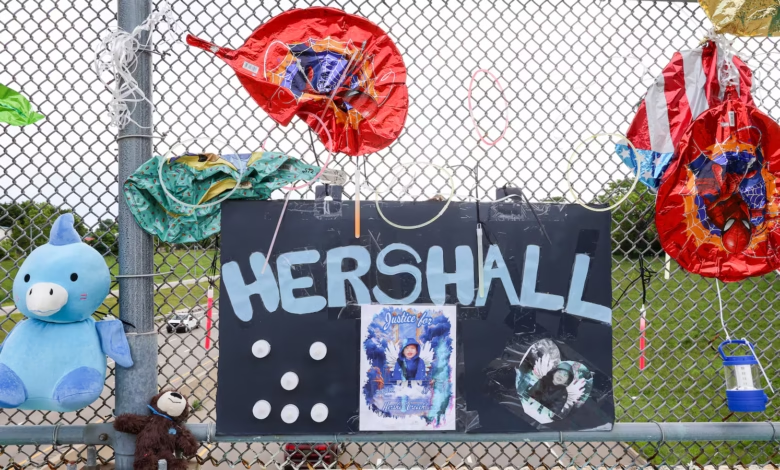
The heartbreaking death of 7-year-old Hershall Creachbaum Jr., a nonverbal autistic boy whose remains were discovered in July 2025, has exposed critical gaps in child protection practices while offering important lessons for improving the safety and well-being of children across Ohio.
An independent review by the Ohio Department of Children and Youth examined the actions of county agencies in handling Hershall’s case, revealing both compliance and failures. Montgomery County Children Services followed the required procedures for intake and referral under the Ohio Administrative Code, ensuring every report was promptly referred to the appropriate agency. Montgomery County Administrator Michael B. Colbert emphasized the professionalism and dedication of caseworkers, noting that their work, often challenging and emotionally demanding, remains central to protecting vulnerable children.
Yet, even where procedures were followed, documentation at the conclusion of the investigation was incomplete. Proper record-keeping is essential not only for accountability but also for guiding follow-up interventions, ensuring that no child falls through the cracks.
The review found more serious lapses in Clark County Children Services, where the child’s guardian resided. These included:
- Screening Shortcomings: Hershall’s disability and inability to communicate were not adequately considered during the screening process, leading to misjudgments about his vulnerability.
- Delayed Contact: A face-to-face visit did not occur within the first four working days after the referral, delaying critical assessment.
- Incomplete Interviews: The mother’s boyfriend, later implicated in Hershall’s death, was never interviewed, leaving a key safety risk unaddressed.
- Safety Assessment Errors: Assessments inaccurately recorded that Hershall could remove himself from danger and communicate maltreatment, undermining the reliability of protective measures.
These gaps reveal the challenges faced when safeguarding children with complex needs and the importance of accounting for each child’s unique circumstances. Children who cannot advocate for themselves require heightened vigilance, thorough assessment, and timely documentation to ensure their protection.
The tragedy also illustrates the importance of inter-agency collaboration. Montgomery and Clark counties had varying levels of compliance, highlighting how coordination and consistency between agencies are crucial to effective child protection. Strengthening these systems, along with continued training and oversight, can help prevent similar tragedies.
While Hershall’s sibling has been confirmed safe, the case underscores that prevention requires both systems and people acting in concert: trained, diligent caseworkers supported by accurate procedures, clear communication, and prompt action. The Ohio Department of Children and Youth has pledged to continue supporting counties in improving compliance and child welfare practices while working with legislators to identify reforms that enhance oversight and accountability.
This case offers a broader, enlightening lesson: safeguarding children is a continuous responsibility that demands attention, precision, and compassion. Early identification of risk, thorough assessment, accurate documentation, and strong inter-agency collaboration are not optional, they are essential. As Colbert emphasized, recognizing the dedication of frontline professionals is equally important, but systems must be designed to support them fully.
Hershall Creachbaum Jr.’s story is tragic, but it also provides a vital opportunity for learning. By examining failures and implementing improvements, child protection agencies can better serve the most vulnerable, ensuring that every child, regardless of ability, has a safe environment in which to grow, learn, and thrive.
This tragedy reminds us that protecting children is not a reactive effort, it is a proactive, continuous commitment, requiring vigilance, empathy, and structured systems to prevent harm before it occurs.