International Migrants Day 2025: Children, Families, and the Human Face of Migration
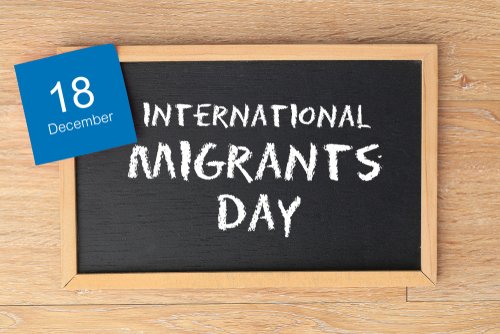
Every year on 18 December, the world observes International Migrants Day, a United Nations–designated occasion that recognises the contributions of migrants and draws attention to the realities they face. In 2025, the observance takes on renewed significance as migration continues to shape families, communities, and national development across every region of the world.
The day was proclaimed by the United Nations General Assembly in 2000 to mark the adoption of the International Convention on the Protection of the Rights of All Migrant Workers and Members of Their Families, approved on 18 December 1990. The convention affirms that migrants, regardless of status, are entitled to fundamental human rights and dignity. International Migrants Day serves both as recognition and as a call to responsibility.
Migration as a Family Experience
Migration is rarely an individual story. For many, it is a family decision shaped by the need for safety, stability, education, or economic survival. Children and caregivers are often at the centre of these journeys, whether moving together, following later through reunification, or remaining behind while loved ones seek opportunities abroad.
According to United Nations estimates, more than 280 million people live outside their country of birth. Among them are millions of children growing up in migrant families, navigating new languages, school systems, and social environments. Others experience separation from parents who migrate for work, relying on remittances and long-distance caregiving to sustain family life.
International Migrants Day invites reflection on how policies and public attitudes affect these families. Access to education, healthcare, housing, and legal protection shapes not only individual outcomes but also long-term community well-being.
Children on the Move
Children affected by migration face distinct challenges and responsibilities beyond their years. Some travel with their families under difficult conditions, while others are displaced by conflict, environmental pressures, or economic collapse. Climate-related displacement, in particular, is increasingly reshaping childhoods, as floods, droughts, and extreme weather force families to relocate.
Education is often disrupted during migration, yet it remains one of the strongest tools for stability and integration. When schools are inclusive and well-resourced, they provide more than learning. They offer routine, safety, and a sense of belonging. Ensuring continuity of education for children from migrant families is therefore both a moral and practical priority.
At the same time, children in migrant households frequently act as cultural bridges, learning new languages quickly and helping their families navigate unfamiliar systems. Their resilience and adaptability are among the most powerful, and often overlooked, contributions of migration.
Families and Economic Contribution
Migrant families play a vital role in both host societies and countries of origin. Migrants fill essential jobs in healthcare, agriculture, construction, education, and care services, often sustaining sectors facing labour shortages. Many establish small businesses that create employment and strengthen local economies.
Remittances sent home by migrants support families’ access to food, schooling, healthcare, and housing. In 2025, remittance flows to low- and middle-income countries are projected to reach record levels, far exceeding global development aid. These funds are not abstract financial transfers. They are school fees, medical bills, and daily necessities that hold families together across borders.
For families who remain united in destination countries, economic stability can offer children opportunities that were previously out of reach. For those separated by migration, the emotional cost is significant, underscoring the importance of safe, legal, and family-sensitive migration pathways.
Protection, Dignity, and Responsibility
Despite their contributions, migrant families often face uncertainty and exclusion. Legal barriers, discrimination, unsafe travel routes, and lack of access to services place families and children at risk. Recent years have seen record levels of displacement and, tragically, rising deaths along migration routes.
International Migrants Day highlights the responsibility of governments and institutions to ensure migration is safe, orderly, and respectful of human rights. Family unity, protection from exploitation, access to justice, and child-sensitive policies are central to this responsibility.
Well-managed migration benefits everyone. When families are supported rather than marginalised, communities are more cohesive, economies more resilient, and social systems stronger.
The 2025 Theme: “My Great Story: Cultures and Development”
The 2025 theme places human stories at the centre of migration discussions. It recognises that cultures grow through movement and exchange, and that development is deeply connected to the lives and labour of migrant families.
Children raised in migrant households often grow up with a strong sense of cultural awareness and adaptability. Families blend traditions, languages, and values, enriching the social fabric of their communities. These everyday experiences demonstrate how migration supports connection and shared progress.
Looking Ahead
International Migrants Day is not only about recognition. It is about choices. Choices to design policies that keep families together, schools that welcome every child, and communities that value contribution over origin.
Migration has always been part of human history. Families have always moved to protect their loved ones and to seek better futures. On this day, the global community is reminded that when children and families are protected and supported, migration becomes not a crisis to manage, but a shared opportunity to build more just and inclusive societies. As the world marks International Migrants Day 2025, the focus on children and families serves as a powerful reminder that behind every statistic is a household, a story, and a future still being written.