Ohio Governor Outlines Anti-Fraud Efforts in State-Funded Childcare System
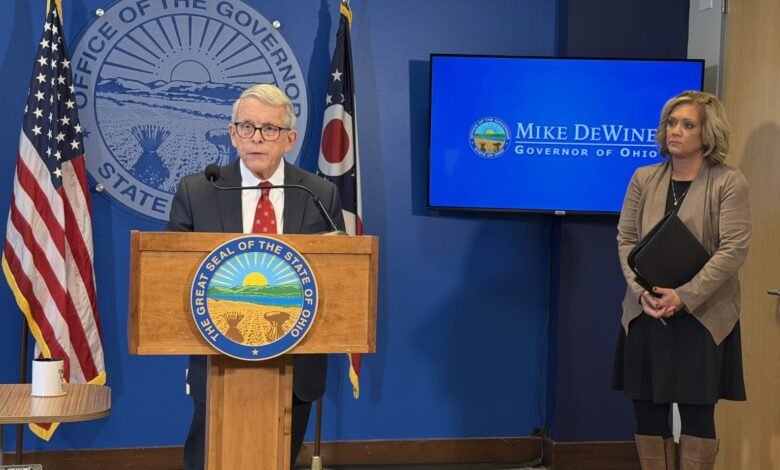
Ohio Governor Mike DeWine has reaffirmed the state’s commitment to preventing fraud in publicly funded childcare programs, citing multiple layers of oversight, enforcement actions, and recent reforms aimed at protecting taxpayer funds.
Speaking alongside Ohio Department of Children and Youth Director Kara Wente, DeWine said the state continues to pay childcare providers based on attendance rather than enrollment, a policy he described as central to accountability.
“The federal government said today that states can continue to pay based on attendance,” DeWine said. “We will do whatever we can to stop fraud.”
DeWine stressed that Ohio treats allegations of misuse in the childcare system seriously and encourages public reporting.
“We have built multiple layers of accountability into our system,” he said. “We actively encourage Ohioans to report concerns so we can investigate and take action.”
Addressing public discourse surrounding fraud investigations, the governor cautioned against framing the issue in ethnic or community terms.
“We need to look at this not as a Somali problem but as a fraud problem,” DeWine said. “The focus should be on what all of us can do to stop fraud.”
According to the Department of Children and Youth, the state received 124 fraud tips from the public in 2025. As a result, 61 childcare programs were required to repay overpayments to the state, and 12 programs were closed. Investigations found that 30 of the reported facilities were operating in compliance with state and federal law, while 26 cases remain under review.
The department also conducts routine and unannounced health and safety inspections, along with reviews of family eligibility and financial practices. In 2025 alone, more than 10,000 unannounced visits were carried out statewide. These inspections led to the closure of 38 childcare centers, with proceedings underway to close two additional facilities through administrative hearings.
In a statement released Dec. 31, 2025, DeWine detailed the safeguards Ohio uses to prevent fraud across its nearly 5,200 state-funded childcare facilities. He acknowledged that the scale of the system creates risk but said oversight measures have been in place since the creation of the Department of Children and Youth.
Ohio currently pays childcare providers only for days a child is physically present. While a federal requirement issued under the Biden administration would mandate enrollment-based payments by August 2026, Ohio has not adopted that approach. DeWine said the Trump administration is reviewing the federal requirement.
To verify attendance, the state requires families to use a personal identification number paired with photo confirmation or a location-specific QR code. The department also relies on monthly cross-agency data analytics to identify fraud, waste, and misuse, along with risk-based and referral-driven monitoring.
Public reporting plays a key role in enforcement. DCY has expanded transparency through an online “Report Fraud” tool, in addition to a dedicated hotline and program integrity email system.
DeWine cited one recent example involving a childcare facility in Columbus that was flagged on social media because a Google Maps image showed a tobacco shop at the address. After investigation, the department determined the image was outdated and confirmed the daycare had opened later and had not yet received public funds. The facility was inspected in October.
The department has also tightened internal controls. In June 2025, DCY launched a PIN-sharing enforcement initiative, reminding more than 65,000 families that PINs must not be shared with providers. Over 7,500 families reset their PINs as a result.
In November, DCY reformed payment categories by increasing part-time and full-time hour thresholds to reduce incentives for improper billing across providers. More recently, the department closed a loophole allowing children to be authorized for care at multiple providers without sufficient justification. A review of 1,200 cases led to the termination of more than 900 authorizations.
DeWine said additional safeguards, including random monthly case reviews and targeted monitoring of high-risk practices, are scheduled to take effect in January 2026.
“These steps are about protecting children, families, and taxpayers,” the governor said. “We will continue to strengthen the system and act when wrongdoing is found.”