High School Students Step Into History, Serving as Pallbearers for the Forgotten Dead
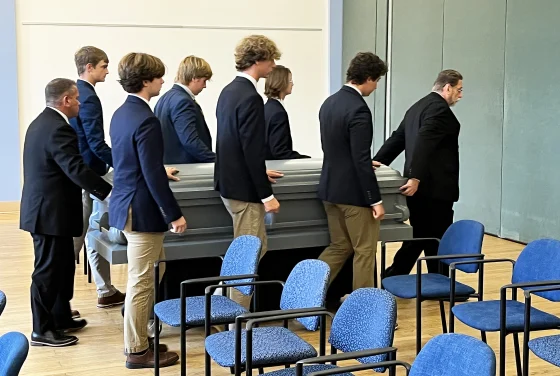
In a remarkable act of compassion, high school students across the country are volunteering as pallbearers at funerals for people who die without family or friends, carrying the final remains of the forgotten with dignity and care. The growing trend is filling a profound need in communities, showing young people stepping into roles many adults never imagine — honoring lives that might otherwise go unrecognized
Students Carry the Weight of Legacy — and Hope
Across multiple high schools, groups of students have begun offering pallbearer services for individuals who pass away with no one to carry their remains or attend their funerals. In some cases, the deceased were veterans, economically vulnerable, or socially isolated, and their bodies might otherwise have remained unclaimed at morgues.
What started as isolated acts of community service has grown into a movement rooted in respect for human dignity. Students are being asked to step forward not just to carry a coffin or urn, but to give a solemn send-off to people who lacked family or close friends at the end of life — a role that mixes grief with purpose and compassion.
For the young people who volunteer, the experience is often transformative. Many say that participating helps them confront big questions about life, death, worth, and belonging — and gives them a deeper appreciation for their own communities and families. In some schools, students train for their role and learn not only the physical act of serving as pallbearers but also how to approach funerals with dignity and respect.
The practice, while unusual, highlights something powerful: that even when someone dies alone, there are young people willing to show up, carry the remains, and ensure that life is marked with a final gesture of respect. For classmates, families, and entire communities, seeing teens take on these duties sends a clear message: every life matters, and compassion isn’t limited by age.
Would you like me to craft a child-focused or education-oriented version of this story that speaks directly to how schools can support empathy and service learning?