Congratulations to Vivek Ramaswamy and Dr. Apoorva Ramaswamy on the Arrival of Their Third Child: Exploring the Rights of Children Born into the Limelight
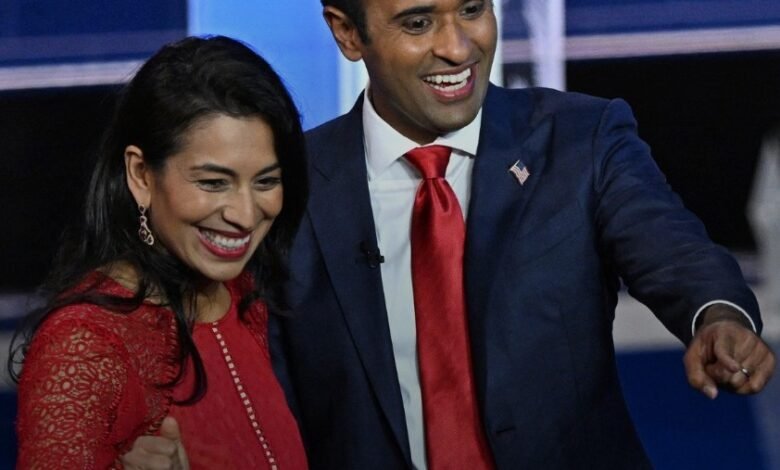
Congratulations to Vivek Ramaswamy and Dr. Apoorva Ramaswamy on the birth of their third child. Reporting indicates they announced the birth of their daughter, Savithri, publicly, an understandably joyful moment shared in full view of the public.
Yet the announcement also reopens an important question we rarely address with enough seriousness: what happens to children who are born into visibility they did not choose?
Ramaswamy is not only a private citizen; he is a prominent public figure in Ohio politics. And for public figures, family life is rarely “private” in the normal sense. Even a birth announcement, something ordinary for most families, can become a public artifact: searchable, shareable, and permanent.
This is not new.
The Obamas entered the White House with children, and the world watched Malia and Sasha grow up under a microscope. Sasha was 7 and Malia was 10 when they moved into the White House, according to PBS. Barron Trump was also a child during Donald Trump’s first term; he was born in 2006. In the UK, royal children are raised with an explicit awareness that public interest will follow them; Prince George, born in 2013, is second in line to the throne behind his father. More recently, JD Vance and his wife, Usha Vance, publicly shared news about expanding their family.
These examples are not offered as gossip, but as a prompt for a serious question: when children are born into high visibility, they inherit exposure they did not choose. Their images, names, routines, and even their childhood mistakes can become public property, recorded, circulated, and preserved online long before they have the maturity to consent.
That reality raises a rights-based concern: how do we celebrate public families while still protecting the child’s privacy, dignity, safety, and psychological space to grow outside the glare?
So the question is not whether children of prominent leaders will attract attention. They will. The real question is this: what does constant exposure do to a child, and what does it do to parenting?
What research and public-health guidance suggest
We do not need to sensationalize this to admit what serious observers have been saying for years: political families can carry unique strain, and children can be harmed when public life consumes private life.
A historian cited by The Guardian warned that politicians should do more to protect their children’s mental health, pointing to patterns of wellbeing problems linked to the pressures around political families.
The digital era adds an entirely new layer: attention no longer fades when the camera moves on. What is posted becomes data, copied, archived, repurposed. The American Academy of Pediatrics has repeatedly emphasized that the modern “digital ecosystem” can affect children’s health, safety, and wellbeing, and that families should move beyond simplistic thinking and be intentional about quality, context, and protection.
Beyond wellbeing, there is growing legal and scholarly concern about children’s privacy when adults broadcast their lives before they can consent. Recent legal scholarship discusses the privacy risks and possible long-term harms when a child’s image and story are traded for public attention, whether by influencers, celebrities, or any adult with a platform.
The pressure lands on both sides: parents and children
On parents:
Public figures are constantly forced into trade-offs: share a little to seem human, or share nothing and be accused of secrecy. Every family moment becomes politicized, praised, mocked, and weaponized. Even something as personal as a child’s name can become a public controversy, as recent reporting around the Ramaswamy announcement illustrates.
On children:
Children can develop a sense that they are being watched, judged, and narrated by strangers. They may experience identity pressure, being treated as symbols rather than persons. And as they grow, they face an unusual burden: their early life is already documented publicly, often without their permission.
A balanced way forward
A positive public announcement can still be done with child-centred discipline. The issue is not that public figures should pretend they have no families. The issue is that children should not become collateral in the public’s appetite.
Practical guardrails public parents can adopt:
1.Limit identifiable detail (full locations, schools, routines).
2.Control imagery: fewer photos, less context, tighter privacy settings.
3.Create a family media boundary: what is never shared, no matter what.
4.Prepare for unwanted attention: security awareness, digital hygiene, and age-appropriate conversations.
5.Let the child “own” their story later: as they mature, they should decide what becomes public.
None of this cancels joy. It simply insists that visibility is not harmless, and children should not bear the cost of adult public life.
A society can celebrate leaders’ families while still holding one line: a child is not public property.