$14.7 Million Head Start: Ohio Secures Major Federal Grant for Young Children
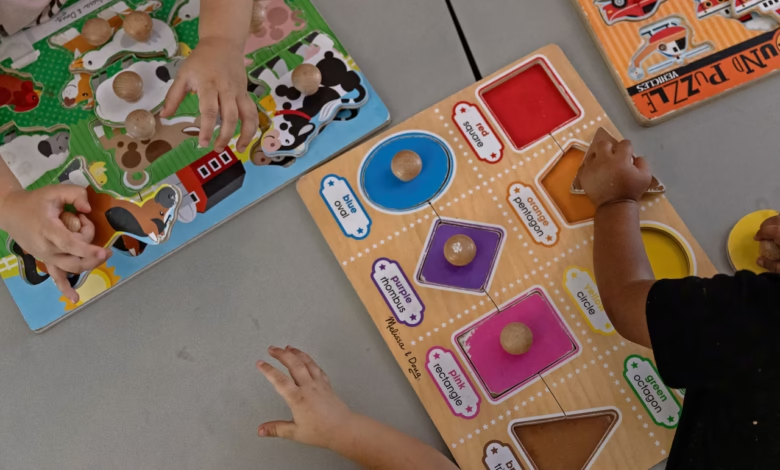
COLUMBUS, Ohio — Ohio has been awarded a one-year $14.7 million federal Preschool Development Grant – Birth through Five to strengthen early childhood readiness for school and expand supports for young children and their families. The funding, provided by the U.S. Department of Health and Human Services’ Administration for Children and Families, is intended to help improve the state’s early care and education systems from birth through kindergarten entry.
Although Ohio has received similar awards annually under this federal program since 2018, the latest allocation comes at a crucial moment when child development and wellbeing are central to broader discussions about children’s rights, protection, and long-term success.
Early Foundations as Rights and Protection
Children’s rights frameworks emphasize that every child is entitled to adequate care, education, health, and development opportunities that support safe, healthy growth. Access to quality early learning and supportive programs prior to kindergarten is widely understood as a protective factor that enhances cognitive, emotional, and social development. These early experiences reduce the likelihood of academic struggles and widen gaps that often emerge before children even begin school.
Under the Preschool Development Grant program, states are supported in strengthening birth-to-five early care and education systems by coordinating existing services, improving quality standards, and making programs more accessible and navigable for families. The intent is not simply to increase funding, but to create cohesive systems that better respond to children’s developmental needs and rights as outlined in international and national child welfare frameworks.
How This Funding Works
The federal Preschool Development Grant – Birth through Five (PDG B-5) program is designed to help states leverage and coordinate existing resources to improve early childhood care, learning, and family support services. States are encouraged to strengthen partnership among early childhood care providers, health and family services, and educational agencies to create mixed delivery systems that serve the full birth-to-kindergarten continuum.
In Ohio, the funding is being used to upgrade technology in early education settings, foster professional learning for early care providers, support curriculum development, and build a statewide early childhood research and impact hub. These investments are expected to improve the quality of services that children receive during crucial areas of development for language, social-emotional learning, and early numeracy and literacy skills.
Protecting Children’s Future and Supporting Families
By improving early childhood systems, this grant can play a role in protecting child development long before formal schooling begins. Early educational experiences have been shown to strengthen resilience, improve long-term academic outcomes, and reduce the need for remedial interventions later in life. Programs that offer supportive, responsive learning environments can especially help children who are at risk due to socioeconomic or environmental challenges.
From a child protection perspective, better-coordinated early care systems also connect families with health, developmental screening, and supportive services, which can reduce risk factors associated with neglect and developmental delays. When families are better informed about child development and supported through those first critical years, children are more likely to enter school healthy, safe, and ready to learn.
Teaching Financial Planning Through Early Investment
While the Preschool Development Grant is focused on early childhood systems and learning, the broader policy investment also carries implicit lessons about financial preparedness and planning. Access to quality education and care has long-term economic implications for children and their families. Children who experience quality early learning are more likely to stay in school longer, achieve higher academic performance, and become economically productive adults. In this sense, investing in early childhood is also a form of long-term financial planning at both individual and societal levels.
For families, access to coordinated early care reduces financial burden and uncertainty, enabling parents to work, pursue education, or engage in stable employment. This support can help families plan their finances more effectively, knowing that essential care and education services are available and supported by public systems.
Looking Ahead
With the PDG B-5 funding, Ohio joins 22 other states receiving similar awards aimed at strengthening early childhood systems nationwide. States are expected to use this funding to build strategic plans, improve service alignment, and enhance access and quality of early learning opportunities, particularly for underserved children and families.
Although the grant runs for a one-year period, its impacts are expected to support systemic improvements that can be sustained through collaboration among state agencies, local partners, educators, and families. For children, it should mean expanded opportunities to grow, learn, and thrive, protections that begin long before kindergarten and extend throughout their educational journey.