MOVIE REVIEW OF THE WEEK: “Abuse in the Church” — DW Documentary
A raw, first-person reckoning with abuse, silence, and the long road to justice.
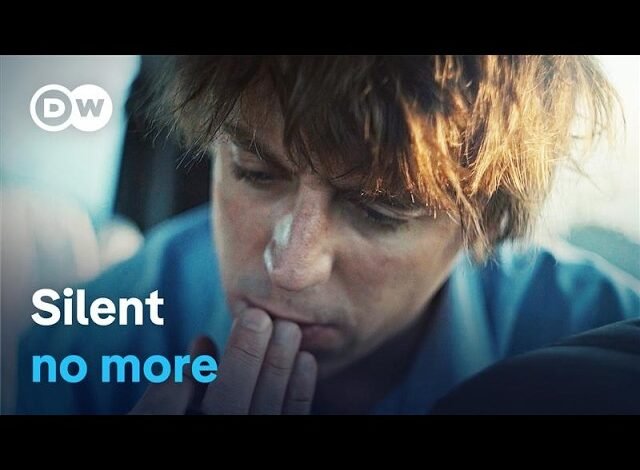
The DW Documentary directed by and starring Jérôme Clément-Wilz, follows his story as a young man who sits at a kitchen table, flipping through his mother’s old diaries, and discovers that he attended a holiday camp with his abuser not twice as he had always believed but six times over six consecutive years. He counts the entries. One. Two. Three. Four. Five. Six. Then he sits very still.
It is one of the most quietly devastating scenes in the documentary, not because of what is shown, but because of what it reveals: that the mind, in its effort to survive, can erase years. That memory is not a recording but a negotiation between what the self can bear and what it cannot. And that for many who have suffered abuse at the hands of trusted adults, the process of seeking justice is also, inescapably, the process of learning what actually happened to them.
This is the territory that Abuse in the Church inhabits and it does so with a rigour, honesty, and raw emotional intelligence.
OVERVIEW
Jérôme Clément-Wilz is a French documentary filmmaker. He is also a man who, as a young boy growing up in Orléans, was repeatedly abused by Olivier de Scitivaux, a Catholic priest who served at the parish of Saint-Paterne and ran holiday camps, altar boy groups, and pastoral programmes that gave him sustained, largely unsupervised access to boys in his care.
The abuse began when Jérôme was approximately eight years old and continued for years. It included groping, oral sex, and penetration. For much of his adult life, Jérôme carried the consequences; psychiatric hospitalisation, post-traumatic stress disorder, urological problems with psychological causes, depressive disorders, broken schooling, and homelessness without fully understanding their source. His mind had done what traumatised minds sometimes do: it had buried what was unbearable and handed him fragments.
When other complainants began filing reports against de Scitivaux, and when those reports began to include accounts of rape, something shifted for Jérôme. He recognised, in their testimony, the shape of his own experience. He filed his own complaint. And on the day he did, he also picked up a camera.
“I only thought of filming it when the other victims filed complaints,” he says early in the film. “As more reports came in, I knew I wasn’t imagining things. That I’m not the only one. My accusation is legitimate and so is filming this.”
What followed was six years of filming: from the day the complaint was filed to the day the verdict was handed down. The result is one of the most important and demanding documentaries of the past decade.
WHAT THE DOCUMENTARY SHOWS
Abuse in the Church is structured not as a conventional investigation but as a first-person chronicle a filmed diary of the legal, psychological, and familial journey that unfolds when a survivor decides to pursue justice in adulthood.
We follow Jérôme through conversations with his lawyers as they build the case, advise him on how to present his memories, and gently push him toward expanding his charges to include rape. We watch him return to the physical spaces where the abuse occurred, a room with no windows, a corridor corner, a camp dormitory and we observe what happens to a person’s body when it re-enters those spaces. The camera does not dramatise these moments. It simply records them. That restraint is part of what makes them so affecting.
We follow Jérôme to Orléans, to the court where he faces de Scitivaux for the first time since childhood. “I want to see his hands,” he says on the way there, almost to himself. When they meet, de Scitivaux denies everything. He says there was touching, but that it was not premeditated. He answers “no” to the charges of rape. Jérôme comes out of the confrontation shaken, reporting flashbacks, physical sensations, the abuser’s face appearing when he tries to sleep.
We also follow Jérôme through the frustrating bureaucratic realities of the French legal system, a bail decision that temporarily returns de Scitivaux to freedom, the filing of appeals, the slow accumulation of corroborating testimony from other survivors, the years of waiting.
And throughout all of it, we watch Jérôme grapple with something even harder than the legal process: the human relationships that surround it.
THE CONCENTRIC CIRCLES OF SILENCE
There is the pastoral care supervisor who tells Jérôme she began receiving complaints about de Scitivaux’s behaviour with young people in 1997, reported them to the diocese, spent two years monitoring him, and eventually resigned because she could not continue working alongside him. There is the counsellor who told the diocese directly that de Scitivaux should no longer be permitted to travel with young people, that he had abused her son. The diocese received this information. It did not act.
There is the community that, as one local woman puts it, had known for a long time. “Half of Orléans knew,” she says, matter-of-factly. Records later established that the first complaint against de Scitivaux was filed in December 1983, a full year before Jérôme was born. He would not begin being abused until several years later. The institution knew, or had been told, or had strong reason to investigate, and it protected its own.
But the most painful circle of silence in the film is the one closest to Jérôme: his own family.
His father, he discovers, wrote a letter to the bishop of Orléans in either 1996 or 1997, the exact year is uncertain raising concerns about de Scitivaux. The bishop died in October 1997. Nothing changed. And yet Jérôme, by the evidence of his mother’s diaries, continued to attend the holiday camp and visit the rectory for years afterward. His father says he did not know the extent of what was happening. He says the family probably just assumed Jérôme was preparing for Mass, performing altar boy duties. Normal things.
“I was 12,” Jérôme says quietly. “I wasn’t allowed to just wander around.”
In another phone call one that will stay with any viewer long after the film ends, Jérôme’s mother suggests, gently, that perhaps he is “exaggerating a little to give the matter more weight.” Jérôme’s response is immediate and wounded. “How could you?” he asks. Then: “I don’t believe it. Exaggerating? That’s sick.” He ends the call.
Later, his mother acknowledges that the family failed. “We did the wrong thing back then,” she says. “It’s true.” Whether this constitutes denial, guilt, self-protection, or genuine incomprehension is something the film wisely refuses to adjudicate. It presents, and it lets the viewer sit with the discomfort.
ON MEMORY, TRAUMA, AND THE LAW
One of the film’s most important contributions to the public conversation about abuse is its honest and unflinching portrayal of how traumatic memory actually works and how poorly the legal system is equipped to accommodate it.
Jérôme’s memories are incomplete. They are non-linear. They arrive in fragments; a face, a smell, a physical sensation and they resist the kind of coherent, sequential narrative that courts require. He remembers two years at the holiday camp; his mother’s diaries show six. He remembers specific incidents but not their order. He has no memory at all of what happened between ringing the doorbell of the rectory and walking back out through the garden. “There’s nothing in between,” he says.
His lawyers navigate this carefully. They remind him that his memories are legally significant even in their fragmentary form. They remind him that physical corroboration, the years of psychiatric records, the hospitalisation notes, the documented PTSD supports his account. They encourage him, when he is ready, to expand his charges to include rape: not to exaggerate, but because what he experienced legally constitutes rape, and naming it accurately matters.
When Jérôme finally revisits the room at the holiday camp where penetration occurred, and then speaks about it on camera, the scene is handled with extraordinary care. There is no sensationalism. There is no close-up of anguish for its own sake. There is simply a man, standing in a room, saying what happened to him there. The weight of it is enormous. The simplicity is its own form of dignity.
The film also gives important screen time to the phenomenon of the body’s response to traumatic memory, the flashbacks, the physical sensations, the intrusive imagery that arrives without warning in the night. Jérôme describes these experiences with clinical precision and obvious distress. His therapist explains, briefly and clearly, that the body can respond to remembered trauma with concrete physical sensations. This is not dramatisation. It is neuroscience. And it is a reality that the film takes seriously in a way that most legal and social systems still do not.
THE VERDICT AND WHAT FOLLOWS
After years of denial, Olivier de Scitivaux confesses. In court, with his victims and their lawyers present, he says: “I admit everything without reservation, including oral sex and penetration.” He had previously denied the rape charges in their entirety. He now also confesses to similar conduct in the early 1980s, conduct that predated the first formal complaint by years.
At the request of Jérôme’s attorney, de Scitivaux is asked to address Jérôme directly. He is asked to confirm that it happened. He confirms it. He is asked to tell Jérôme that Jérôme is not crazy. He says: “Jérôme, you are not crazy.” He is asked to confirm that it was not Jérôme’s fault. He confirms it.
It is a moment of extraordinary rarity in these cases: an abuser, in open court, validating the account and the sanity and the innocence of the person he harmed. Prosecutors sought an 18-year sentence. De Scitivaux was convicted of the rape and sexual assault of four boys between 1990 and 2002.
And Jérôme’s response, in the immediate aftermath, is not what the arc of a conventional documentary would predict. He does not weep with relief. He does not speak of vindication. He steps outside, reaches for his cigarettes, and says: “I’m not crazy.”
It is the most human ending imaginable. Justice, when it finally arrives, does not erase what came before it. It simply closes one door and opens the next. The work of living continues.
WHY THIS FILM DEMANDS TO BE SEEN
Abuse in the Church is not comfortable viewing. It is not designed to be. But it is essential viewing and not only for those with a direct personal connection to the subject matter.
It is essential because it shows, in granular and irrefutable detail, how institutional abuse operates: not through the actions of one isolated individual, but through the collective management of reputation, the quiet suppression of complaints, the social cost of speaking up, and the cultural habit of believing that what we do not name cannot hurt us.
It is essential because it demonstrates what genuine accountability looks like not as a press release or a policy document, but as a human being standing in a courtroom and saying, to the person he harmed: you are not crazy, it happened, it was not your fault.
The documentary is available to watch on DW Documentary’s YouTube channel here
THE EVERY PART OF MY BODY IS PRIVATE TO ME® MASTERCLASS
Documentaries of this nature do not exist in a vacuum. They arrive into communities; families, schools, faith organisations, workplaces where the very dynamics they expose are quietly operating every day. The question they leave behind is not merely an emotional one. It is a practical one: what do we do now?
One answer is being offered this year in Nigeria, where Taiwo Akinlami widely recognised as one of Africa’s foremost voices on child safeguarding and family strengthening is leading a series of immersive, in-person learning experiences under the title Every Part of My Body Is Private to Me® Masterclass: Priceless Lessons From a Child Sexual Abuse Story — Healing Pathways, Prevention Strategies, and Culture–Systems Fortification.
Taiwo Akinlami brings to this work not only nearly three decades of professional practice in safeguarding and family law, but also his own personal history as a survivor of sexual abuse in childhood. That combination of lived experience and professional rigour is precisely what this moment requires.
The Masterclass is built on four pillars:
- The first, My Story, grounds the learning in personal experience transformed into principles and actionable understanding.
- The second, Prevention Strategies, equips participants with the tools to reduce vulnerability and interrupt abuse before it begins.
- The third, Healing Pathways, addresses the restoration of dignity and emotional wholeness; for survivors, for families, and for communities.
- The fourth, Fortification, is perhaps the most distinctive: it moves participants beyond compliance, beyond policy, toward the deeper work of building safeguarding cultures that endure because they are genuinely lived, not merely documented.
- This last pillar responds directly to the central lesson of films like Abuse in the Church. De Scitivaux operated for decades inside institutions that had policies. The diocese received complaints. The diocese had structures. None of it mattered, because the culture of those institutions prioritised reputation over accountability, silence over honesty, and institutional continuity over the safety of children. As the safeguarding movement has increasingly recognised: systems do not create safety. They only manage what the surrounding culture has already produced.
The Masterclass is scheduled in three cities:
- Abuja — Sunday, May 10, 2026
- Port Harcourt — Sunday, May 17, 2026
- Lagos — Sunday, June 1, 2026
Registration is open at: https://taiwoakinlami.com/epp2meImmersion
This is not a conference. It is not a seminar. It is a culture-shaping experience; the kind of deliberate, values-grounded work that the world Jérôme Clément-Wilz documents so painfully is still, in most communities, yet to undertake.
Watch the film. Then register for the Masterclass. The conversation that one begins, the other continues.