
Over Half of Ohio Children Trapped in Childcare Deserts, Raising Child Safety Alarms
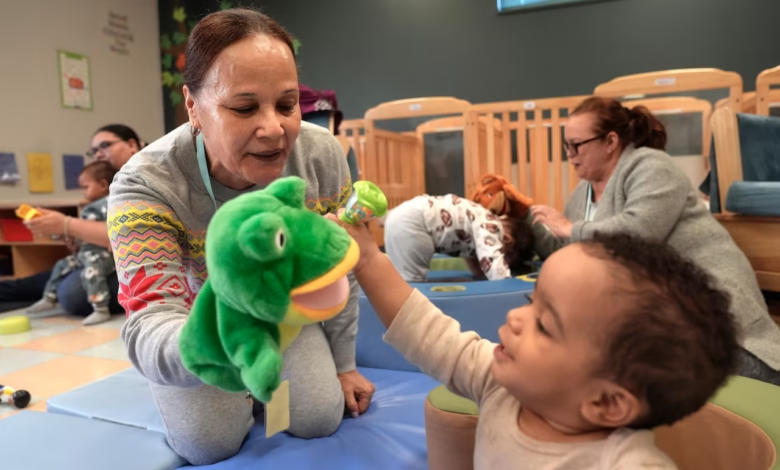
A new study showing that more than half of Ohio children under the age of six live in “childcare deserts” has raised fresh concerns about child protection, supervision, and safeguarding across the state.
The research, conducted by the Center for American Progress, found that over 55% of young children in Ohio reside in areas with little or no access to licensed childcare facilities. This figure is significantly higher than the national average of 46%.
From a safeguarding perspective, experts warn that limited access to regulated childcare environments can increase risks for young children, especially when families are forced to rely on informal or unlicensed care arrangements.
The study mapped licensed childcare centres across the state and measured access within a 20-minute drive. It found that rural communities are most affected, where facilities are either scarce or non-existent. Urban centres such as Cleveland, Columbus, and Cincinnati show better access, though affordability remains a challenge.
According to the report, 3.3% of children live in areas with no licensed childcare at all. Meanwhile, 19.4% are in regions with very low supply, and 32.5% face severe shortages. All three categories are classified as childcare deserts.
Child welfare advocates say these gaps go beyond economic concerns. They argue that inadequate access to regulated care can expose children to inconsistent supervision and limit early safeguarding oversight.
The issue has also drawn attention from business groups and policymakers. The Ohio Chamber of Commerce estimates that childcare shortages cost the state billions in lost productivity each year, as parents struggle to remain in the workforce.
State authorities have introduced several initiatives to improve access, including employer-supported childcare programmes and voucher systems for families. However, the report argues that these measures alone are not enough to address structural shortages in licensed childcare slots.
Lawmakers have also launched a childcare recruitment and mentorship grant aimed at increasing the number of providers. The programme received funding through the Department of Children and Youth, with additional allocations planned for the next fiscal year.
Despite these efforts, researchers warn that without a significant expansion in regulated childcare capacity, many young children will continue to grow up in environments with limited formal oversight, raising ongoing safeguarding concerns.