
COLUMBUS, Ohio: Children do not choose the homes into which they are born, yet must live with the consequences of crises within them. By the time a Court Appointed Special Advocate and Guardian ad Litem arrives, family harmony has often already been disrupted.
Since joining CASA in 2022, I have visited children, listened to families, interviewed professionals, written court reports and appeared in court to advocate for our precious children. The work has expanded my understanding of childhood across cultures and circumstances.
Those experiences accompanied me to my fourth Ohio CASA Celebrate Kids! Conference, held from September 30 to October 2, 2026, at the Hyatt Regency Downtown Columbus. Its 31st year brought CASA volunteers and staff, judges, attorneys and child-welfare professionals from across the state together under the theme, Building and Strengthening Connections.
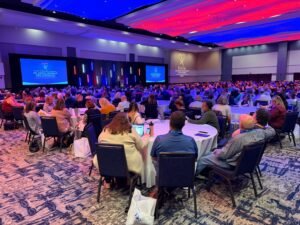
From what I observed at the venue, I estimated that between 700 and 800 people attended. The official program listed three plenaries and 30 workshop offerings across five periods. I attended two plenaries and five workshops. This report reflects my choices, questions and lessons; other participants will carry home different experiences.
Eileen P. Anderson, EdD, Case Western Reserve University’s Anne Templeton Zimmerman, MD Professor of Bioethics, opened with Cultural Humility, Models and Competence. I came away seeing culture not merely as dress or speech but as beliefs shaped by socialization, faith, fear and experience. Having served families from Africa, the Middle East and America, I was reminded to remain teachable and distinguish cultural difference from danger.
Jessica A. Ramos, immigration-team manager and senior attorney at the Legal Aid Society of Southwest Ohio, led Working with Immigrant Children and Families in Ohio’s Child Welfare System.
She described the pace and complexity of immigration changes. My takeaway was clear: families need qualified immigration attorneys. Enforcement against a parent can disrupt a child’s care, schooling and security; specialist support and family safety planning matter.
I asked questions because I do not like taking avoidable confusion home. Children deserve advocates willing to keep learning.
Thursday’s keynote, The Power of Staying: Connection, Trust, and the Adults Children Remember, affected me most deeply.
Tristian Smith, an author, Army veteran and Nebraska CASA volunteer, experienced more than 25 foster homes. After losing his mother and growing up without his father, he encountered danger where safety should have existed. His story explained why children hurt by trusted adults may distrust the next helping hand. Yet one family stayed.
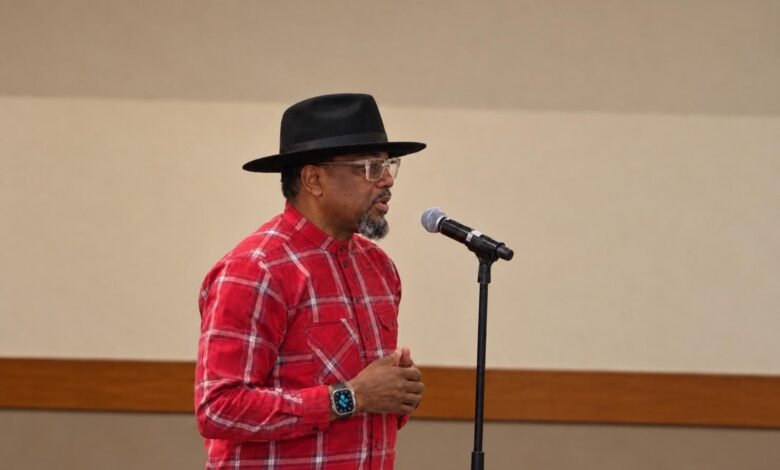
I asked how we should support boys growing up without fathers, including those whose fathers are deported, incarcerated or absent. The question also arose from my childhood and my responsibility to my son.
Smith stressed trustworthy male mentors who model emotional steadiness, accountability and care.
My second question concerned faith. Having experienced childhood abuse, I found healing through faith, yet religion can also be manipulated to harm children. Smith recalled foster parents whose conduct, rather than compulsion, drew him towards their faith. His counsel was to embody values through respectful care.
Faith follows me everywhere. Like smoke, it shows up. The question is whether it appears through love and service or control.
Attorney James Ellis, former Mayor of Fremont, led H.U.G.S.: A Practice for Working in the Trenches as a CASA Volunteer or GAL, emphasizing humility, tolerance for uncertainty, gratitude and collaboration. His reflection on service as life-giving touched me: at 56, I want more years with my young son. Asked what drove him, he described seeking further ways to serve after being mayor. He received the conference’s Attorney of the Year award.
Anderson’s Communication with Adolescents workshop connected interviewing and “vibing” with anthropology, psychology and neuroscience. Development, trauma, culture and digital life affect communication. Rules alone cannot repair disconnection. We must learn how to speak so adolescents listen and listen so they speak.
At the Foster Care Lived Experience Panel, adults described difficult childhoods, completing college and building meaningful lives. The session was facilitated by Daniel Sullenberger, lead staff attorney at CASA of Franklin County, and also anchored by John Collins, a youth advocate, CASA volunteer and Guardian ad Litem, and a trustee of Friends of CASA of Franklin County.
One panelist was the first young person Collins supported after becoming a CASA and Guardian ad Litem. Years later, advocate and former child stood together in the same room. That reunion made the long reach of this work visible.
Two panelists had their former CASA volunteers present. Seeing those advocates beside young adults they once supported as children moved me.
I told the panel that their stories were inspiring and encouraging, reminding us that our work was not in vain.
I hope one day to share such a gathering with children I have served. Advocacy’s fruit may take years to become visible.
Family responsibilities kept me from Friday’s plenary. My final workshop, The Power of One, was led by Andre Davis and Ashleigh LoVette, PhD, on supporting children with incarcerated parents.
Having served children with one or both parents incarcerated, I welcomed its resources, books and emphasis on trusted adults. Parental incarceration creates risks; it does not determine a child’s destiny.
The presenters also spoke about the stigma experienced by children whose parents are incarcerated—stigma that can come from society, peers and the communities around them. That point prompted my question.
I had watched Daughters, the documentary on Netflix about girls reconnecting with their incarcerated fathers through a dance, and had long been troubled by its public identification of the children. The documentary undertook noble work by helping the girls reconnect with their fathers. But if we acknowledge that these children already face stigma, why show their faces and identities? Could the story have been told while protecting them? In my view, the filmmakers should have recognized that risk and done better to protect the children’s identities.
The presenters suggested the filmmakers would have their reasons. My concern remained.
UNICEF’s ethical reporting guidance prioritizes children’s best interests, privacy and protection from harm, including above advocacy. It also respects their right to participate.
For me, that demands attention to consequences beyond consent. Once we acknowledge the stigma, storytellers must consider whether public identification may extend it. A moving story should be told with the child’s future dignity in view.
Between sessions, I met a former paralegal whose questions during Smith’s keynote first caught my attention. She later told me how she had left a well-paying job and gone to law school in pursuit of her longstanding dream of advocating for children. Her journey spoke to the resilience of the human spirit—the courage to pivot and the refusal to mistake a comfort zone for one’s final destination.
I also met a Nigerian woman whose experience during 9/11 changed her outlook on life and, she said, prepared her for the work she would later undertake with CASA. After hearing Dr. Phil speak about CASA, she became a volunteer and has now served for 16 years. Her story embodied the theme of the adult who stayed, and I found it deeply inspiring and encouraging.
Other people approached me because of my questions about faith and our work. One gave me a small statue of Jesus.
Together, these encounters made the conference theme, Building and Strengthening Connections, real and personal.
For those unfamiliar with CASA, trained community volunteers are appointed by courts to learn about a child’s circumstances, maintain contact, speak with the adults and professionals involved, report to the court and advocate for the child’s best interests. They enter amid crisis and try to become a dependable, informed presence.
If you live in the United States and particularly in Ohio, I invite you to look closely at CASA. Learn what your local program does. Attend an information session. Consider becoming a volunteer, supporting a program or telling someone else about the opportunity. You may be able to help place hope, stability and the possibility of a different future within a child’s reach.
The conference has ended. The commitment continues.
The work is not in vain.