Autism and Stigma: Finding Ability in Disability – BBC Africa Eye Documentary
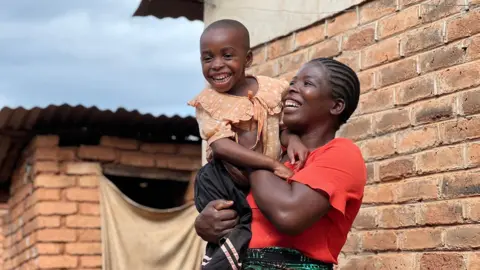
There is a particular cruelty in being failed twice; first by circumstance, and then by the society that should have caught you. Life on the Spectrum, a new investigative documentary from BBC Africa Eye released this April to coincide with World Autism Acceptance Month, chronicles exactly this double failure with an honesty that lingers long after viewing. Set in Malawi but speaking to the whole of Africa and beyond, it asks a question the global health community has been too comfortable ignoring: what does autism look like when the safety nets simply do not exist?
The answer, delivered through the stories of three Malawian families, is both devastating and in moments quietly triumphant. Reporter Florence Phiri and executive producer Nicola Milne have assembled a film that refuses sentimentality while never surrendering its empathy. That balance is harder to achieve than it sounds, and it is what makes this documentary worth watching twice.
More than 60 million people live on the autism spectrum globally, according to the World Health Organisation, with millions more affected as family members and caregivers. The popular imagination, shaped largely by Western media and research, tends to picture autism against a backdrop of specialist schools, therapy sessions, and diagnostic appointments. Life on the Spectrum strips all of that away, and what remains is raw, clarifying, and at times almost unbearable to watch.
“A lot of people think autistic children do not feel anything. They have feelings. Everything you and I feel, he can feel it, maybe even more. Imagine you can feel everything but you are locked inside your body, is that not a terrible thing to go through?”
— Onil, parent, speaking to BBC Africa Eye
The documentary opens on the outskirts of Lilongwe, Malawi’s capital, where we meet Natasha, a single mother raising five-year-old Shalom. He is non-speaking, unable to feed himself, and lives with intense physical restlessness that exhausts them both. Desperate for answers in a country with only one government-run psychiatric referral hospital for a population of over 22 million, Natasha does what an estimated 80% of Malawians do when confronted with something they cannot explain: she turns to a traditional spiritual healer. Fifteen dollars, a significant amount in this context changes hands for a ritual intended to return her son’s soul, after she is told his condition is caused by witchcraft.
It would be easy, and wrong, to read Natasha’s choice as ignorance. The film understands this. What her story actually exposes is a vacuum. When there are no diagnostic services, no specialist educators, no community health workers trained in neurodevelopmental disorders, something fills the space. In Malawi, as across much of sub-Saharan Africa, that something is often a spiritual framework one that, for all its comfort, cannot provide speech therapy, occupational support, or a simple explanation of what a sensory overload feels like. The healer is not the problem. The absence of any alternative is.
The second family the documentary follows is Martha, whose mental health deteriorated so severely under the weight of unsupported caregiving that she reached a breaking point contemplating the unthinkable. Dr Christopher Mhone, Programme Manager at St John of God, one of Malawi’s few specialist centres for children with disabilities, puts the situation with an honesty that lands like a verdict: “When a mother thinks of killing a child with disabilities, it means the system has failed.” Martha’s story does not end in tragedy. She found support through St John of God and now speaks publicly to help other parents in her position. But the film is honest that her survival was, in many ways, accidental, a question of geography and the presence of one well-placed institution.
The third family offers a different chapter of the same story. In Blantyre, Malawi’s financial capital, parents Onil and Angela are raising two sons on the autism spectrum. Their account traces the arc from shock and blame “In the beginning you tend to look for a reason,” Onil says through grief, research, and something that begins to resemble peace. Angela describes trawling the internet for evidence that autistic children could lead fulfilling lives; Onil delivers the film’s most arresting monologue, inviting us to imagine existing with a full emotional life that you simply cannot communicate. The tragedy he names is not autism itself. It is the world’s failure to meet it with understanding.
The geographic contrast between the three families is quietly deliberate. Natasha’s story, in the peri-urban margins of Lilongwe, represents maximum vulnerability. Martha’s represents a near-miss, a crisis narrowly averted. Onil and Angela’s Blantyre story shows what relative access to resources and the internet can offer. None of these families has it easy. But the differences between them are not a spectrum of personal resilience, they are a map of inequity.
The wider picture: autism across Africa
To understand why Life on the Spectrum matters beyond its immediate subject, it helps to step back and consider what research tells us about autism across the continent. The short answer is: not nearly enough, and what we do know is alarming.
Accurate prevalence data for autism in Africa is scarce, largely because conducting large-scale epidemiological studies requires infrastructure, funding, and political will that are frequently absent. This scarcity has fed a dangerous misconception, that autism is rare in Africa. It is not rare. It is under-detected and under-reported.
- 600K+ Children estimated to be affected by autism in Nigeria alone, based on a 2014 hospital study suggesting 2.3% nationwide prevalence
- 270K Individuals estimated to live with autism in South Africa, with approximately 5,000 new cases identified annually
- 60M+ People on the autism spectrum globally, according to the World Health Organisation, with millions more affected as caregivers
Nigeria, Africa’s most populous nation with over 200 million people, has no national policy on neurodevelopmental disorders. Studies conducted in paediatric neurology clinics between 2007 and 2012 found prevalence rates of 1 in 43.5 in South-West Nigeria and 1 in 125 in the South-East figures that, given the stigma around reporting, are almost certainly underestimates. South Africa, which has incorporated disability rights into its legislation and early childhood policies, offers a more developed picture, but even there, prevalence studies remain localised and inconsistent. Egypt, Kenya, and Ghana have begun research initiatives, but the data remains thin.
The diagnostic challenges are compounded by the tools themselves. Most autism screening instruments currently in use were developed in Western contexts and may not be culturally appropriate for African populations. The Nigerian Autism Screening Questionnaire; a 26-item tool developed specifically for Nigerian contexts represents the kind of locally adapted response that researchers across the continent are pushing for. But such tools remain the exception, not the rule.
What the film captures, and what the research confirms, is a structural pattern: diagnosis is delayed or never occurs, specialist services are unavailable or unaffordable, and parents navigate profound complexity without guidance, financial support, or relief. The families with the fewest resources are precisely those required to provide the most unsupported care. There is a cruel logic to this paradox that no amount of awareness alone can dismantle.
Myths that cost lives
At the heart of Life on the Spectrum is a question about knowledge; who has it, who is denied it, and what happens in the space between. The film does not explicitly catalogue the myths that surround autism in Malawi and across the continent, but they are present in every scene. Understanding them is essential context for any viewer who wants to engage with the film seriously.
Autism is caused by witchcraft, spiritual forces, or is a form of divine punishment.
Autism is a neurodevelopmental condition linked to genetic, environmental, and prenatal risk factors. No supernatural forces are involved. This myth drives families toward harmful interventions and away from evidence-based support.
Autism can be cured through prayer, herbal remedies, or traditional healing rituals.
Autism has no cure, but early intervention speech therapy, occupational therapy, structured education dramatically improves outcomes. Spiritual practices may offer emotional comfort but cannot replace developmental support.
Autistic children cannot feel emotions or form meaningful attachments.
Autistic individuals experience a full emotional life. Communication differences do not indicate emotional absence. As Onil puts it in the film, his non-speaking son may feel everything and more while being unable to express it in ways others recognise.
Autism is the mother’s fault caused by something she did during pregnancy or by her family’s spiritual failures.
Research suggests no single cause of autism. Maternal blame is not only scientifically baseless but deeply harmful, contributing to family breakdown, father abandonment, and the isolation of mothers who are already under extreme strain.
Autistic individuals cannot learn, work, or lead meaningful lives.
With appropriate support, autistic individuals can and do thrive academically, socially, and professionally. Autism is a spectrum, no two people experience it identically, and every autistic child has their own constellation of strengths and challenges.
These myths are not merely intellectual errors. They cost lives. They are the reason Natasha paid $15 to a healer instead of receiving counselling. They are the reason Martha came close to the unthinkable. They are the reason, according to reports, that roughly a third of children with autism in Malawi do not live with their biological fathers, who leave blaming the mother rather than confront what they do not understand.
The inequity at the centre of everything
One of the documentary’s most important arguments, woven through every scene rather than stated directly, is about equity. Autism does not discriminate by income, geography, or social class. But support systems emphatically do.
Being born into poverty does not make a child any less autistic. It does, however, make getting help dramatically harder. In high-income countries, the failures of autism support systems are real and well-documented. In low-income African nations, those failures are compounded by near-total absence; no diagnosis, no therapy, no specialist schools, no respite care, no publicly funded services of any meaningful kind. The families in this film are not differently situated by luck. They are differently situated by the accident of birth geography, and by the accumulated political choices of governments that have chosen, year after year, not to invest in their most vulnerable citizens.
Dr Mhone’s words cut to the bone: “As a country, we owe children with autism a lot. We know they exist and we know we are failing them because they are invisible.” That invisibility is manufactured. Children like Shalom are hidden by families protecting themselves from shame, by systems that have never built the infrastructure to see them, by a global conversation about autism that largely happens in languages and institutions to which they have no access.
Progress is being made slowly, and in places. Advocacy organisations like the Kenya Autism Alliance and the Ike Foundation for Autism in Nigeria are fighting stigma and supporting families. Tele-therapy platforms and digitised screening tools are expanding access in underserved areas. South Africa has moved furthest in terms of policy, embedding disability rights into legislation and early childhood frameworks. But the gap between what exists and what is needed remains vast.
ConclusionLife on the Spectrum is compassionate journalism at its most purposeful. It does not look away from the hardest moments; a mother paying a healer because there is no clinic; another contemplating violence because there is no relief; a father describing his non-speaking son as locked inside his own body. But it holds these moments inside a larger argument about systemic failure, cultural myth, and the urgent need for equity-centred approaches to disability support across Africa.
Watch the documentary here: “Autism and Stigma: Finding Ability in Disability – BBC Africa Eye Documentary”