DeWine Puts Ohio Children First: State Expands Vision Program to Boost Learning and Development

As Governor Mike DeWine enters his final year in office, his attention appears firmly fixed on issues that directly shape the lives of Ohio’s children. In a political climate often dominated by short-term wins, this focus stands out as a reminder that meaningful progress begins with how a society treats its youngest members.
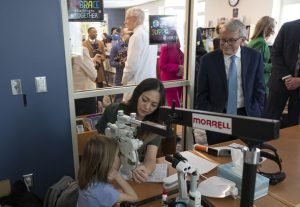
One of the clearest examples is the push to expand OhioSee, the Ohio Student Eye Exam program. Currently running as a pilot in 15 counties, the initiative brings vision screenings, full eye exams, prescription glasses, and referrals directly to children. This approach acknowledges a simple but often overlooked reality: a child who cannot see clearly cannot learn to their full potential.
DeWine’s own words underline the urgency. While schools are required to screen children, nearly two-thirds of those flagged for further exams never receive them. By taking eye care directly into schools, OhioSee removes barriers that have quietly held children back for years. It is a practical step that protects children’s right to education by ensuring they can fully participate in the classroom.
The governor also pointed to the strain faced by schools supporting children with developmental disabilities, particularly in districts affected by failed tax levies. Acknowledging these gaps matters. Children with additional needs cannot afford delays in support, and sustained investment is essential if inclusive education is to be more than a promise.
Beyond education and health, DeWine’s call for tougher regulation of Kratom reflects a broader concern for child safety. With more than 200 unintentional overdose deaths linked to the substance in recent years, many involving young people, the issue is no longer abstract. Families across Ohio are living with the consequences.
Taken together, these priorities reveal an understanding that child development is not confined to classrooms alone. Health, safety, education, and family stability are deeply connected. When one is neglected, the effects ripple through a child’s life.
What makes Ohio’s approach noteworthy is its emphasis on early, preventative action rather than reaction. Programs like OhioSee show how governments can intervene before small challenges become lifelong obstacles. This is a lesson that extends far beyond state borders.
Around the world, children continue to face preventable barriers to development simply because basic needs go unmet. Ohio’s efforts serve as a reminder that when leaders choose to center policy on children, the benefits reach not only individual families, but the future of society itself.
If there is one takeaway from DeWine’s final-year focus, it is this: doing better for children is not a slogan. It is a responsibility — and one that deserves sustained commitment long after political terms come to an end.
Source of Image: Kirk Irwin/Getty Images