Examining Ohio’s Child Care Fraud Debate: Data, Policy, and Competing Proposals
Ohio’s publicly funded child care system is facing renewed scrutiny as state lawmakers debate how best to prevent fraud while preserving trust, privacy, and access for families who rely on assistance. What has emerged is not a single legislative response, but two competing approaches that reflect different views of the problem and how far the state should go to address it.
The discussion has been shaped by recent fraud allegations, viral social media activity, and comparisons to large-scale cases uncovered in Minnesota in recent years. At the same time, state officials point to existing safeguards and warn against drawing conclusions that outpace the available evidence.
Background to the current debate
Concerns about child care fraud intensified nationally after federal prosecutors in Minnesota uncovered extensive schemes beginning in 2021. Those investigations involved multiple public assistance programs, including child care, and resulted in dozens of convictions and estimates of losses reaching into the billions of dollars.
In Ohio, the issue resurfaced following the circulation of online videos in which individuals questioned attendance at certain child care centers. Some lawmakers have credited these videos with drawing attention to potential weaknesses in the state’s oversight system, while others caution that social media content does not substitute for formal investigations.
Governor Mike DeWine and state agencies have emphasized that fraud can occur in any publicly funded program and across communities, and that enforcement must be grounded in verified findings rather than assumptions.
The proposal for expanded monitoring
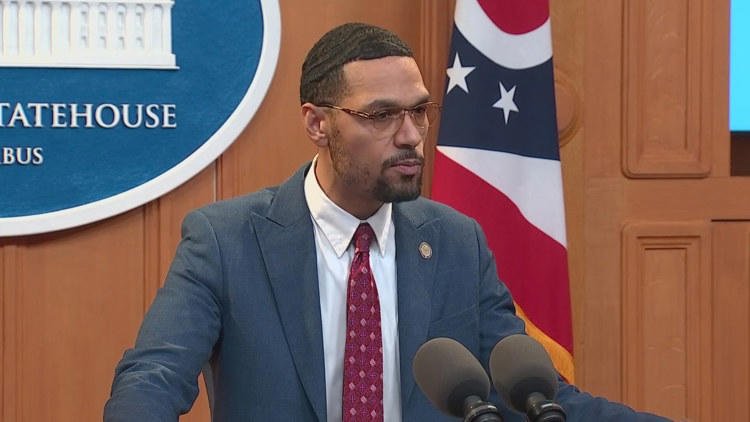
State Rep. Josh Williams, joined by Attorney General Dave Yost, has introduced the Childcare Fraud Prevention Act. The proposal would require all child care centers receiving public funds to install video cameras in classrooms, excluding private areas. The footage would be recorded during operating hours, stored for at least 60 days, and made accessible to the Department of Children and Youth during inspections or investigations.
The bill would also allow the department real-time access to video feeds to verify attendance remotely, pause payments immediately when fraud is suspected, and expand the attorney general’s authority to prosecute cases.
Williams argues the measure is necessary because Ohio reimburses child care providers based on attendance rather than enrollment, a system he believes is vulnerable to abuse without stronger verification tools. Supporters of the proposal also contend that video records could assist in investigating abuse allegations and resolving disputes over attendance.
The legislation does not yet include a cost estimate or a specific appropriation. Williams has said those figures would be addressed during committee hearings, should the bill advance.
A narrower alternative approach
Not all Republican lawmakers agree that continuous video monitoring is the appropriate solution.
Reps. Phil Plummer and Tom Young have introduced House Bill 647, which takes a more targeted approach. Their proposal focuses on upgrading data systems, expanding the attorney general’s investigative authority, and making it easier for the state to temporarily halt payments to providers under credible suspicion of fraud. The bill includes a proposed $5 million investment in improved oversight infrastructure.
Plummer has said state agencies are already actively addressing fraud and warned that claims of widespread abuse risk overstating the scope of the problem. He and Young developed their proposal in coordination with the Department of Children and Youth and its leadership.
The two bills highlight a clear policy divide: one emphasizing real-time monitoring through technology, the other prioritizing data analysis, inspections, and administrative controls.
What Ohio’s enforcement data shows
According to the governor’s office, the Department of Children and Youth conducted more than 10,000 unannounced inspections of child care facilities last year, averaging roughly two per licensed provider. Those inspections resulted in 38 facility closures.
In addition, the department received 124 tips from the public, which led to 12 child care programs being shut down and 61 providers ordered to repay more than $2 million in overpayments.
Supporters of stronger enforcement cite these numbers as evidence that fraud remains a significant concern. State officials note, however, that the figures include billing errors alongside intentional misconduct and reflect activity across an entire year rather than a sudden surge tied to recent allegations.
More recently, DCY reported receiving over 60 tips in a two-week period and inspecting 50 facilities in response. Findings from those inspections have not yet been released.
Privacy and community concerns
The proposal to install cameras in child care classrooms has raised questions beyond fraud prevention. Recording children throughout the day represents a notable expansion of state oversight into early childhood environments, prompting concerns about data security, confidentiality, and the long-term implications of continuous monitoring.
There is also heightened sensitivity around how enforcement measures are perceived and applied. Ohio has the second-largest Somali population in the United States, and some community advocates worry that public discourse around fraud may inadvertently stigmatize immigrant-run child care centers.
State leaders, including the attorney general, have emphasized that fraud enforcement must rely on evidence and apply evenly, regardless of who operates a facility.
The broader child care context
Democratic lawmakers have argued that the current focus on fraud, while important, risks overshadowing broader challenges within Ohio’s child care system. The state ranks low nationally in terms of income eligibility for child care subsidies, with a family of three losing eligibility at an annual income of $37,440.
At the same time, the estimated cost of infant care in Ohio exceeds $10,000 per year, placing significant pressure on working families and providers alike.
From this perspective, oversight reforms address only one part of a system already strained by affordability and access concerns.
A debate still unfolding
Neither proposal has yet been fully vetted through the legislative process. Williams’ bill has not been formally introduced or assigned a number, while House Bill 647 is expected to move through committee in the coming weeks.
As lawmakers consider next steps, the debate underscores the complexity of balancing accountability, privacy, fiscal responsibility, and equitable treatment within publicly funded child care.
The outcome will shape not only how Ohio detects and responds to fraud, but also how families and providers experience the state’s role in early childhood care.