Movie Review of the Week: “Lead Children” (2026) — Poisoned Truth: Courage, Conscience, and the Fight for Our Children
Directed by: Maciej Pieprzyca
Starring: Joanna Kulig, Zbigniew Zamachowski, Michał Żurawski, Sebastian Pawlak
Language: Polish
Country: Poland
Platform: Netflix
Introduction
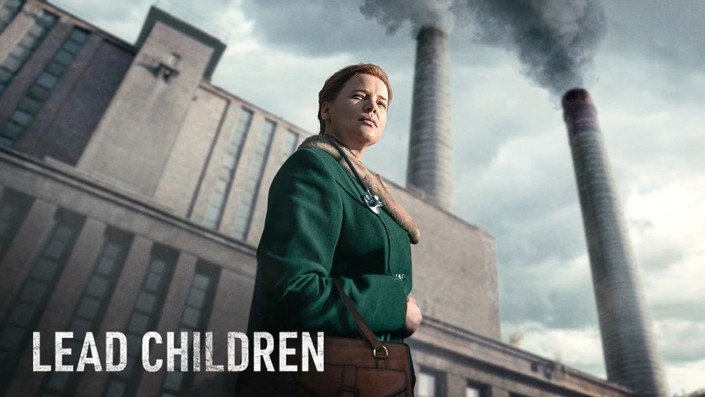
Lead Children is not merely a historical drama. It is a sobering reminder that the greatest threats to children are sometimes invisible, odorless, and politically inconvenient. Inspired by the true story of Jolanta Wadowska-Król, the series takes us to 1970s Communist Poland, into the industrial district of Szopienice in Katowice, where smokestacks dominate the skyline and a smelting plant fuels the local economy. Beneath the soot-covered air and muddy streets, something far more dangerous is settling into the bodies of children: lead.
At its heart, this is a story about moral courage. About what happens when a young doctor notices a pattern no one else wants to see. And about the cost of telling the truth when systems prefer silence.
Plot Overview
Dr. Jolanta Wadowska-Król, known as Jola, is a committed pediatrician working in a modest hospital serving a working-class community. When children begin arriving with unexplained symptoms ranging from weakness, developmental delays, anemia, recurring illnesses, she senses something is deeply wrong.
The pattern becomes undeniable. The most severely affected children live closest to the massive steelworks looming over the town. As laboratory results confirm dangerously high levels of lead in their blood, Jola realizes she is not facing isolated medical cases. She is staring at a public health catastrophe.
But uncovering the cause is only the beginning.
Local officials dismiss her concerns. Party authorities worry about political embarrassment ahead of an important state visit. Security officers begin watching her movements. Even neighbors hesitate to support her, fearful that exposing the truth could threaten the very plant that feeds their families.
Her investigation strains her marriage. It isolates her professionally. It places her safety at risk. The series opens with Jola being threatened at gunpoint, a stark indication that this fight is not just medical, but political.
Environmental Injustice: When Industry Comes Before Children
One of the most unsettling elements of Lead Children is how ordinary the harm appears. Children play in contaminated soil. Families drink polluted water. Smoke drifts through open windows.
Lead exposure in children can cause:
- Lowered IQ
- Damage to the brain and nervous system
- Learning and behavioural difficulties
- Slowed growth
- Hearing impairment
The tragedy is compounded by delay. Authorities hesitate. Reports are softened. The state prioritizes image over intervention. The series forces viewers to confront a hard truth: when economies depend on harmful systems, children often bear the hidden cost.
A Woman Against the System
Joanna Kulig delivers a deeply compelling performance as Jola. She is not portrayed as invincible or saintly. She is stubborn, emotionally transparent, sometimes impulsive. Yet what defines her is clarity. She cannot unsee what she has discovered.
There are small, human moments woven into the tension, brief dances in her kitchen, flashes of humor, tenderness with her patients. These scenes remind us that resilience is not loud heroism. It is daily persistence. Her struggle evokes comparisons to Erin Brockovich, yet the tone here is far more restrained and somber. There are no triumphant speeches. Change arrives slowly, painfully, and at personal cost.
Why It Matters for Families and Safeguarding Professionals
Lead Children broadens the definition of child protection. It reminds us that safeguarding is not limited to preventing abuse within homes or schools. It includes environmental safety, public health accountability, and ethical leadership.
The series quietly reinforces powerful lessons:
- Children are the first to suffer when systems fail.
- Prevention must always outweigh reputation management.
- Whistleblowing is often lonely, but necessary.
- Communities must balance economic survival with moral responsibility.
For educators, health professionals, policymakers, and parents, the story serves as both warning and inspiration.
Conclusion
With emotional restraint and historical grounding, Lead Children stands as a powerful tribute to one woman’s refusal to compromise when children’s futures were at stake. It does not sensationalize suffering. It does not offer easy victories. Instead, it honors persistence, conscience, and the belief that truth is worth defending, even when it isolates you. The series is not simply a drama about pollution. It is a shows the courage required to protect children when the air itself turns against them.