Not Broken (2021): A Story of a Differently Abled Child Discovering Her Worth
Movie Review of the Week
Introduction
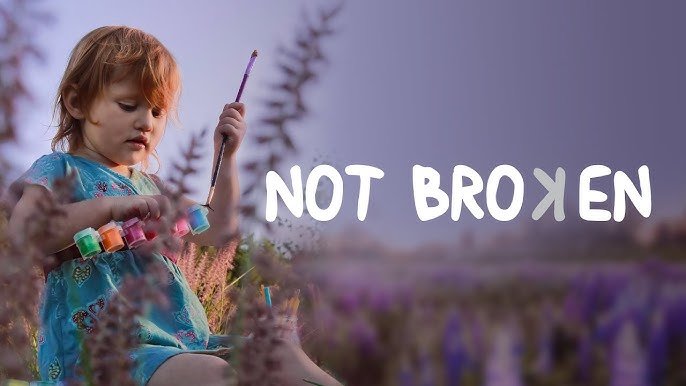
This week’s feature turns to Not Broken (2021), a moving drama directed by Lauren Havel and written by Jennifer Havel. Produced by Lauren Grace Studios, the film tells the story of a young girl living with dyslexia and attention challenges who must discover her identity and purpose in a world that measures success narrowly.
At the heart of the story is Winter Knight, a gifted child whose artistic brilliance contrasts sharply with her struggles in traditional schooling. The film raises a fundamental question that every parent, educator, and safeguarding professional must confront: When a child struggles academically, do we see limitation, or do we look deeper to discover their unique strengths?
Not Broken reminds us that a child may be differently abled, but a child is always a person, one with dignity, agency, the power of choice, and immeasurable worth.
The Story
The film follows the life of Winter Knight from early childhood into young adulthood. From the beginning, it becomes clear that Winter experiences the world differently. She struggles with reading, writing, and structured academic tasks due to dyslexia and attention challenges. School becomes a place of frustration rather than discovery.
Yet within this struggle lies an extraordinary gift: Winter is a remarkable artist.
As a child, she creates a simple yet stunning drawing of a snowflake that captures attention for its beauty and precision. Her talent continues to grow as she matures, but the recognition she longs for does not come easily.
Winter’s mother, Olivia, loves her deeply and is protective of her future. However, Olivia believes that academic success is the only reliable path to stability. She worries that art cannot sustain a meaningful career, and therefore treats Winter’s talent as a hobby rather than a calling.
This tension becomes one of the central emotional struggles of the film. Winter does not merely battle dyslexia, she also battles the quiet fear that she may never meet the expectations placed upon her.
The Emotional Struggle of a Differently Abled Child
One of the most powerful moments in the film occurs when young Winter, overwhelmed by her academic challenges, says to her mother:
“I’m just stupid and you know it.”
Her mother responds immediately and firmly:
“Don’t ever say that.”
This moment reflects a painful reality experienced by many children with learning differences. When their abilities are measured only by academic performance, they may internalize failure as a reflection of their worth.
The film portrays this struggle with honesty. Winter hates school at first, not because she lacks intelligence, but because the environment fails to accommodate how she learns.
A neuropsychologist later explains that Winter is highly intelligent, yet her dyslexia shapes the way she processes information. In one striking scene, she reads books upside down because it helps her decode the letters more easily. These moments illustrate how differently abled children often develop creative strategies to navigate the world.
Friendship and the Power of Support
Another important dimension of the story is Winter’s friendship with her best friend Sage. Sage excels academically and becomes an emotional anchor for Winter during her most difficult moments.
Their friendship reflects an important truth about childhood: supportive relationships can sustain a child through seasons of discouragement.
When Winter feels like giving up, Sage reminds her of her potential. In one conversation, Sage compares Winter to Leonardo da Vinci, noting that some historians believe the great artist also lived with dyslexia.
The film also introduces Margaret, an elderly woman struggling with memory loss. Winter befriends her and visits her regularly with flowers and cookies. Their relationship becomes unexpectedly important when Margaret’s daughter later plays a key role in helping Winter’s artistic career gain recognition.
Through these relationships, the film emphasizes a crucial safeguarding principle: every child needs a circle of supportive adults and peers who recognize their value.
Failure, Frustration, and the Search for Identity
As Winter grows older, she attempts to enter the workforce but repeatedly encounters setbacks. She struggles in jobs that require precision with numbers, customer orders, or phone transfers. Her learning differences make these tasks difficult, and she eventually loses several positions.
Yet even in these moments, her creativity surfaces. While working in a coffee shop, she begins drawing detailed portraits of customers on their cups rather than simply writing their names.
These small artistic expressions foreshadow the path she eventually discovers. Still, discouragement takes its toll. Feeling like a failure, Winter burns many of her paintings in a moment of despair, an act that reflects the deep emotional weight carried by individuals who believe their gifts have no place in the world.
Discovering Purpose
The turning point in Winter’s story comes when she finally decides to pursue her art seriously. She approaches a local curator who acknowledges her talent but explains that her work does not fit the gallery’s style. Though disappointed, Winter does not stop completely.
Eventually another curator recognizes the originality and emotional depth of her art and offers to showcase her work. This recognition transforms Winter’s outlook. Her ability; once dismissed as impractical becomes the very thing that gives her identity, purpose, and independence.
At this stage, Olivia begins to see her daughter differently. She realizes that Winter’s gift was never a distraction from success, it was the path to it.
Key Themes
1. Every Child Has Unique Intelligence
Winter’s story challenges the narrow definition of intelligence often reinforced by educational systems. Her struggles with reading and numbers do not reflect a lack of intelligence but a different cognitive pathway.
2. Parental Expectations Matter
Olivia’s journey illustrates how loving parents can unintentionally limit their children when they struggle to recognize unconventional gifts.
3. Friendship and Mentorship Shape Identity
Sage’s encouragement and the guidance of supportive adults help Winter discover her place in the world.
4. Differences Are Not Deficiencies
Winter ultimately realizes that her dyslexia does not diminish her value. Instead, it forms part of the perspective that shapes her artistic vision.
Key Takeaways
- A child’s worth should never be measured solely by academic performance.
- Learning differences require understanding, patience, and adaptive support.
- Talents outside traditional academic pathways must be nurtured, not dismissed.
- Supportive relationships can protect children from internalizing failure.
- Self-discovery often comes through perseverance and encouragement.
Conclusion
Not Broken is a gentle yet powerful film that speaks directly to parents, educators, and child advocates. It reminds us that children who struggle in conventional systems are not broken, they simply experience the world differently. For those committed to child safeguarding and development, the message is clear: a child may be differently abled, but a child is always a person; capable of choice, deserving of dignity, and filled with potential.
Where to Watch
Not Broken (2021) is currently available for streaming on Amazon Prime Video.