
School Safety, Child Safeguarding, and the Best Interest of the Child
Introduction
A wave of bomb threats and violent phone calls targeting multiple schools across the state of Ohio recently triggered emergency safety responses, lockdowns, evacuations, and investigations involving local police departments and federal authorities. Schools in the Cincinnati area, including Walnut Hills High School, Indian Hill High School, and Mason High School, were among those affected. Similar threats were reported in other parts of the state including Cleveland, Columbus, and Toledo.
Authorities later determined that many of the threats were part of a coordinated hoax commonly referred to as “swatting,” in which individuals make false reports to provoke a large emergency response from law enforcement. Although the threats were ultimately found not to be credible, the incidents highlight the seriousness with which schools and law enforcement treat any potential risk to student safety.
Beyond the disruption to school activities, the situation offers an important opportunity to examine how modern school safety systems operate, the safeguarding procedures designed to protect children, and why the best interest of the child must remain the central focus of every response.
What Happened Across Ohio Schools
The incident began when multiple schools received threatening phone calls indicating potential violence or bomb threats. At Walnut Hills High School in Cincinnati, a bomb threat was reported around late morning, prompting school administrators to initiate a lock-in procedure while police investigated.
A lock-in differs from a lockdown in that activities inside the building continue but movement is restricted and external access to the building is controlled while authorities assess potential risks.
Other schools took different precautionary steps. Indian Hill High School evacuated students while police searched the building with trained K9 units. Mason High School implemented a soft lockdown affecting several schools in the district while law enforcement investigated the source of the threats.
Across the state, approximately thirty-five schools reportedly received similar threats. In Northeast Ohio, Rocky River High School and several other schools were also locked down after phone calls threatened violence. Authorities quickly identified the pattern of calls and determined they were likely part of a statewide hoax originating from the same non-local phone number.
The Federal Bureau of Investigation confirmed it was aware of the threats and began working with local and state authorities to determine the origin of the calls.
Understanding “Swatting” and Hoax Threats
“Swatting” refers to the act of making a false emergency report with the intention of triggering a significant law-enforcement response, often involving specialized units such as SWAT teams, armored vehicles, or bomb squads.
While some perpetrators treat it as a prank, the consequences are extremely serious. These false threats divert emergency resources, cause widespread panic among families and school communities, and create situations where rapid emergency responses could unintentionally place people at risk.
Under Ohio law, swatting can be charged as a fourth-degree felony punishable by prison time and fines. If anyone is harmed during the police response, the offense can escalate to a second-degree felony with significantly harsher penalties. Authorities may also seek reimbursement for the cost of the emergency response.
The legal consequences reflect the recognition that threats targeting schools, whether real or fabricated are not harmless actions. They disrupt education, traumatize students, and place an unnecessary burden on public safety systems.
School Safety Measures Activated During the Incident
The events across Ohio illustrate how layered safety systems operate when schools face potential threats. Most school districts follow structured emergency protocols designed to protect students while allowing law enforcement to assess the situation.
One of the most common responses is a lockdown or soft lockdown. During a lockdown, classrooms are secured, doors are locked, and students remain inside while staff follow emergency communication procedures. A soft lockdown allows instruction to continue while restricting movement and entry into the building.
Another safety procedure is evacuation. When a threat suggests a possible explosive device, evacuating the building allows authorities to safely inspect the premises without placing students and staff at risk.
In several schools, K9 units trained to detect explosives were deployed to conduct thorough searches of buildings and surrounding areas. Law enforcement officers also conducted perimeter security to ensure no unauthorized individuals could enter school grounds.
Communication is another critical safety measure. School administrators promptly notified families about the situation, reassured them that safety checks were underway, and provided updates once the threat had been resolved.
The Role of Law Enforcement Partnerships
The swift response to the threats demonstrates the importance of strong partnerships between schools and law enforcement agencies. Local police departments, school security teams, emergency responders, and federal agencies such as the FBI often coordinate closely during such incidents.
In the Ohio case, multiple agencies responded quickly to investigate threats, search facilities, and confirm the safety of students and staff. These collaborative efforts are essential because they allow schools to rely on specialized expertise when confronting potential threats.
Law enforcement also plays a key role in identifying perpetrators, tracing phone calls, and determining whether threats originate locally or from outside the state or country.
Strong partnerships ensure that schools are not responding to safety threats alone but are supported by a broader public safety network.
Child Safeguarding and Protection in Emergency Situations
While security measures focus on neutralizing potential threats, safeguarding procedures focus on protecting the emotional and psychological well-being of children during such incidents.
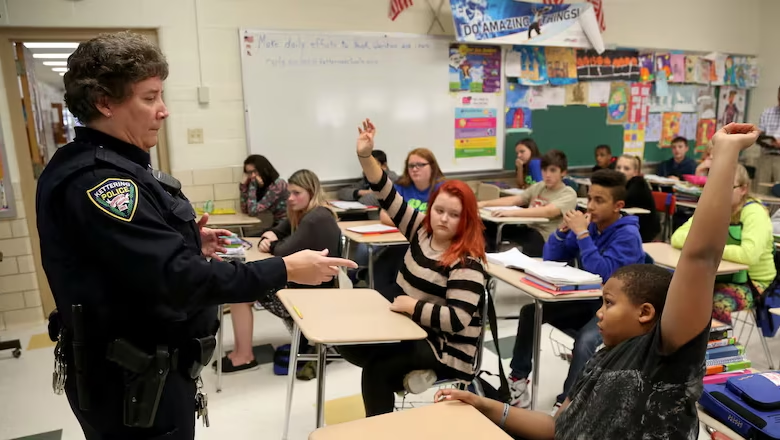
For students, sudden lockdowns, evacuations, and heavy police presence can be frightening experiences. Schools therefore emphasize calm communication, reassurance from teachers, and structured supervision throughout the response.
Teachers and school staff play a critical role in maintaining stability for students during emergencies. Their ability to keep students informed without causing panic helps protect children from unnecessary emotional distress.
Child safeguarding during emergencies also involves ensuring that no child is left unsupervised, that students with special needs receive appropriate assistance, and that communication with families remains clear and timely.
These practices reflect the principle that safety responses must not only address physical risks but also protect the overall well-being of children.
The Best Interest of the Child
At the heart of every school safety protocol lies a fundamental principle widely recognized in child protection frameworks: the best interest of the child.
This principle requires that all decisions affecting children prioritize their safety, dignity, development, and well-being. In the context of school threats, it means responding quickly to potential risks, even when the threat may ultimately prove to be false.
Although lockdowns and evacuations can disrupt learning, they are necessary precautions when the safety of students is uncertain. Taking threats seriously demonstrates a commitment to protecting children rather than dismissing potential risks.
The events in Ohio also remind communities that protecting children requires vigilance not only from schools and law enforcement but from parents, students, and the wider public.
Lessons for Schools and Communities
The statewide threats highlight several important lessons for school communities everywhere.
First, safety protocols matter. The ability of schools to quickly implement lockdowns, evacuations, and coordinated responses shows the importance of planning and preparedness.
Second, communication builds trust. Prompt updates to families help prevent panic and ensure parents understand the steps being taken to protect their children.
Third, safeguarding must accompany security. Protecting students physically is essential, but so is protecting their emotional well-being during crises.
Finally, threats against schools must never be treated as jokes or pranks. The consequences—legal, financial, and emotional are far too serious.
Conclusion
The recent wave of threats targeting schools across Ohio ultimately proved to be a hoax, but the response from schools and law enforcement underscores a critical reality: the safety of children can never be taken lightly.
Through coordinated emergency procedures, strong partnerships with law enforcement, and careful safeguarding practices, schools were able to protect students and restore normal operations.
These events serve as a powerful reminder that protecting children requires preparedness, vigilance, and a shared commitment from educators, families, communities, and authorities. When schools prioritize safety and safeguarding, they uphold the most important responsibility of any education system, ensuring that every child can learn and grow in a secure and supportive environment.