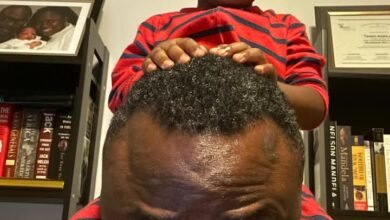
#50PlusDad Reflections on Mothering Sunday: My Mother’s Story, Our Mothers’ Burden
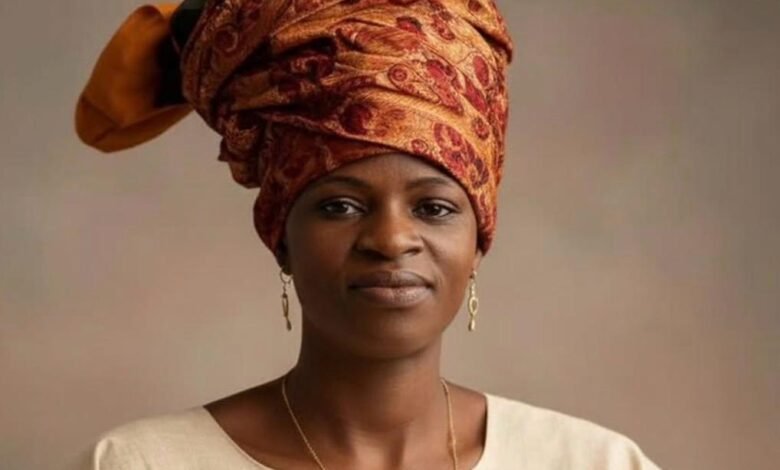
When I think about Mothering Sunday, I do not begin with the calendar. I begin with my mother.
I think of Mutiatu Ayoka Akinlami, through whom I came into this world. Before my twin brother and I were born, she had already suffered the agony of a stillbirth. Then came another difficult pregnancy. By the time she returned home with us, she was so ill she could not breastfeed us. She gave so much to bring us into life that her own strength was terribly spent in the process.
That story has stayed with me all my life. It taught me early that motherhood must never be spoken of casually. A mother does not merely have a child. Very often, she hazards herself to give that child life.
And my mother’s story is not just my family’s story. It is one expression of a wider truth. Mothers carry histories in their bodies and scars in their silence. Even in the structure of many homes, the burden falls disproportionately on them. More mothers are raising children alone than fathers. Even that tells a story.
That is why, when people ask, half in jest and half in irritation, “How many days are we going to spend celebrating mothers?”, I do not find it amusing. Sunday, March 15, 2026, was Mothering Sunday, observed in the United Kingdom on the fourth Sunday in Lent. The American Mother’s Day will still come in May. But the real issue is not how many days are set aside for mothers. The real issue is whether we understand what motherhood costs.
My answer is simple: when it comes to mothers, especially mothers in Africa, there can never be too many days of remembrance, gratitude, reflection, and advocacy.
Motherhood is not a decorative title. It is not a sentimental costume for photographs, flowers, and speeches. It is sacrifice in flesh and blood. It is risk. It is labour. It is endurance. It is the daily choosing of another life over one’s own ease, sleep, comfort, body, and sometimes safety. In many parts of the world, that reality is already demanding. In Africa, and particularly in Nigeria, it is often harsher still.
Perhaps that is why my mother’s story never leaves me. It reminds me that behind every casual reference to motherhood, there are women who have suffered, bled, feared, endured, and still carried on. That is why I cannot join the mockery when people speak as though mothers have already received “enough attention.” Enough attention? On a continent where motherhood is still tied to avoidable suffering, weak systems, silence, and neglect? Enough attention? In societies where mothers are expected to carry almost everything and complain about almost nothing? No. That argument does not make sense.
For many African mothers, motherhood is not only about nurturing; it is also about surviving. It is carrying a child in the womb while carrying anxiety in the mind. It is navigating antenatal care under pressure. It is facing childbirth in environments where the risks remain too high. It is dealing with postnatal struggles that are ignored, infertility that is stigmatized, domestic violence that is hidden, and workplace structures that often punish women for becoming mothers. The World Bank’s assessment of Nigeria records 0% for supportive childcare frameworks. That is not a small gap. It is a devastating measure of how little structural support exists for mothers raising children.
So, no, 365 days are not enough if the purpose of those days is not empty festivity but moral attention.
Celebration, to me, is not noise. It is not performance. It is not flowers without responsibility. It is not public sentiment without public conscience. To celebrate mothers properly is to appreciate them, yes, but also to ask difficult questions. What support do mothers have? What support do they lack? What risks do they carry? What burdens have we normalized? What failures have we tolerated?
That is why days like Mothering Sunday must become more than ritual. They must become a call to conscience.
This is why I celebrate mothers today: biological mothers, adoptive mothers, foster mothers, grandmothers, and every woman who stands in the demanding place of mothering. But I also celebrate women whose work is helping society face the realities surrounding motherhood.
I celebrate Mrs Ayo Ayeni for shining light into the deep darkness of the postpartum crises many women face in Nigeria and across Africa, and for helping to lead a perinatal mental health awakening. I celebrate Adeola Olunloyo for drawing attention to the fertility issues women face, for sharing practical pathways forward, and for offering her own story as a source of inspiration and strength. I celebrate Lola Vivour-Adeniyi for her work in confronting domestic abuse and for helping to give violated women not only a voice, but also a path to safety, dignity, and new life. I celebrate institutions such as WIMBIZ for continuing to call attention to the barriers women face in the workplace, including harassment, bias, and exclusion.
These women and this institution are only a few among many others doing remarkable work. I salute them all. I celebrate them today and always. To honour mothers properly, we must also honour the women and institutions that make the conditions of motherhood more visible, more defendable, and more humane.
Let us therefore be careful what we joke about. Dangerous social attitudes often begin as harmless banter. I have learned a principle in life: I do not lend my voice, even in amusement, to what violates my values. I will not join any humour that diminishes mothers, because motherhood has paid too much for that disrespect.
So here is my reflection on Mothering Sunday: there are not too many days for mothers. There are not enough. Not in Africa. Not in Nigeria. Not anywhere motherhood is still borne with tears, danger, sacrifice, and inadequate support.
And whenever I think about that, I think again of my mother. I think of what it cost her for me to be here. I think of what it has cost countless mothers whose names will never be known beyond their families, but whose sacrifices hold homes, communities, and nations together.
If anything, we have not celebrated mothers enough, and by celebration I mean seen them enough, heard them enough, protected them enough, supported them enough, and stood for them enough.
That is why I speak today.
That is why I honour my mother.
That is why I honour mothers.
Do have an INSPIRED week ahead with the family.