Ohio Lawmakers Introduce Kei’Mani’s Law to Strengthen Child Protection and Safeguarding Systems

Ohio lawmakers have introduced new legislation aimed at strengthening child protection laws following the death of 13-year-old Kei’Mani Latigue of Toledo. The proposed measure, named Kei’Mani’s Law, seeks to improve how the state identifies, tracks, and responds to reports of child abuse and neglect.
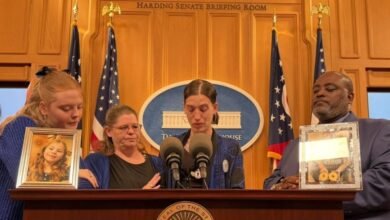
Representative Josh Williams, a Republican from Sylvania Township, announced the bill on Feb. 17, alongside Democratic State Senator Darnell Brewer of Cleveland. Williams said he worked closely with Kei’Mani’s family while drafting the proposal.
“We must evaluate not only whether boxes are checked, but whether our systems communicate effectively, share information in real time and elevate concerns before they become fatal,” Williams said during a press conference.
What the Bill Proposes
Kei’Mani’s Law outlines several reforms to Ohio’s child welfare system, with a focus on faster reporting, improved coordination, and stronger oversight.
The legislation would require every public school in Ohio to appoint a child protection liaison responsible for managing and coordinating suspected cases of abuse or neglect involving students.
It would also require public children services agencies to enter reports of abuse or neglect into the Uniform Statewide Automated Child Welfare Information System, known as SACWIS, immediately rather than at a later time. Automatic notifications would alert appropriate agencies when a report is filed.
Under the bill, SACWIS case records would have to be updated at least every two weeks and remain active until legal conditions are satisfied. Access to SACWIS would expand, for limited statutory purposes, to juvenile courts, law enforcement agencies, and school-based child protection liaisons. The legislation also ensures compliance with state and federal privacy standards.
The Ohio Department of Children and Youth would be required to provide mandatory training on SACWIS access and child protection procedures. Quarterly reports would be submitted to the General Assembly to certify compliance and provide performance updates.
Case Background
Kei’Mani Latigue, a seventh-grade student from Toledo, died last year. Investigators allege that Darnell Jones, who also goes by Darnell Ogletree, killed her and left her body in an abandoned house.
Following her death, one of Kei’Mani’s former teachers told local media that concerns about possible abuse had been reported in the past. Lucas County Children Services investigated earlier allegations but found no evidence that warranted removing her from her home.
A state child fatality review later concluded that the agency met or exceeded its required standards for gathering information related to her safety. The agency has said Kei’Mani was not in its custody at the time of her death and that it had received no reports of possible abuse within a year prior to her death.
Community Response and Ongoing Review
In the wake of the case, Lucas County Children Services established a Child Protection Task Force to review local child welfare policies and reporting processes. The task force is examining transparency, bias, service coordination, prevention strategies, and accountability. Meetings are expected to continue through June, after which a final report with recommendations will be released.
Lawmakers backing Kei’Mani’s Law say the goal is to move beyond procedural compliance and focus on early intervention and real-time communication between agencies. Supporters argue that stronger coordination and clearer accountability measures can better safeguard children and ensure warning signs are addressed promptly.
“If one child is protected because a liaison follows up, if one report receives a faster review because of automatic notifications, if one pattern is identified because updates are required and visible, then we will have honored Kei’Mani’s memory not with words, but with reform,” Williams said.
The bill has been introduced in the Ohio General Assembly and is expected to move through committee hearings in the coming weeks.