By Alexandria Woods

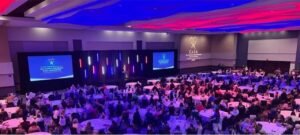
2026 was my first year attending the three-day Ohio CASA Celebrate Kids! Conference. I was sworn in as a CASA/GAL of Franklin County in September 2021, and I began my advocacy shortly thereafter. My curiosity about the annual conference built over the years and never waned, bolstered by inspirational gossip extolling the effectiveness of the sessions and the conference’s ability to bring the Ohio CASA/GAL community together.
Fortuitously, 2026 was the year I could finally attend in person and experience firsthand everything I had, until that point, only heard about from others. Certain sessions were especially impactful for me, and I share my thoughts on those thought-provoking sessions below.
Cultural Humility, Models, and Competence
The conference’s opening plenary session, Cultural Humility, Models, and Competence, was delivered by Eileen P. Anderson, EdD. The session explored identifying cultural backgrounds and differences, navigating those differences, and recognizing when intervention is necessary in the context of a CASA/GAL’s work, supported by real-world case examples.
The session reinforced the need to be open and cautious when considering cultural practices. Without context, observations by someone unfamiliar with a particular culture’s practices can skew perceptions and potentially lead to poor outcomes for the children CASA/GALs serve.
The most fundamental takeaway for me was a reminder to check my biases when interpreting my observations, because those observations form the direct basis of my evaluations when considering the best interests of the child. Behaviors or practices that may initially seem harmful, when viewed through the lens of different cultural norms, may become better understood and prompt a shift in perspective.
The Power of Staying
On the second day of the conference, the plenary session was again the most impactful for me. *The Power of Staying* was delivered by *Tristian W. Smith*, who graciously shared his lived experiences as a child in foster care. He spent his childhood and youth in the foster care system, moving from one home to the next.
Interestingly, he articulated that a simple action by the adults around him helped change his trajectory. That action was consistency.
I learned in this session to look at trust differently. From the perspective of a child who has been let down and disappointed repeatedly, trust is risky. The child may appear standoffish, reserved or watchful because they have learned to take their cues from the adults in their lives.
I learned that safety is paramount, especially for children who have experienced repeated moves. CASA/GALs need to look beyond what children say, especially when they claim to be fine, to understand what they need, even when their behavior might lead others to label them difficult.
During the session, Smith discussed feeling rejected while in foster care, which prompted me to ask: “What made you feel rejected in foster care, and what can a CASA/GAL do to help address those feelings?”
Smith stated that showing up, keeping promises, responding consistently and communicating when plans change are all actions CASA/GALs can take. Such actions build trust and make trusting feel less risky to children. The goal isn’t to fix everything, but to make a meaningful difference.
The Legal Process for GALs
On the final day of the conference, I attended what I felt was an underrated session on the legal process for GALs. The session aimed to inform CASA/GALs about aspects of the legal process beyond the basic legal requirements, helping them become effective advocates when assessing the best interests of the child in light of the totality of the circumstances.
While technical in nature, the session was full of tips and takeaways about what CASA/GALs are permitted to do, how to analyze observations, how adequate care, abuse, neglect and dependency are defined, and other legal requirements. The discussion included interpretations of the Ohio Revised Code based on real cases.
At the conclusion of the 2026 Ohio CASA Celebrate Kids! Conference, I was inspired. I understood again the reasons why. Why I volunteered to be a CASA/GAL. Why serving children was important to my life’s purpose. Why advocacy matters.
I have been a CASA/GAL for a relatively short time, but my desire to support children whose lives have been affected by abuse, neglect or dependency is as strong now as it was in 2021.