TO MY FATHER: A Powerful Tribute to the Transforming Influence of an Involved Father
MOVIE REVIEW OF THE WEEK
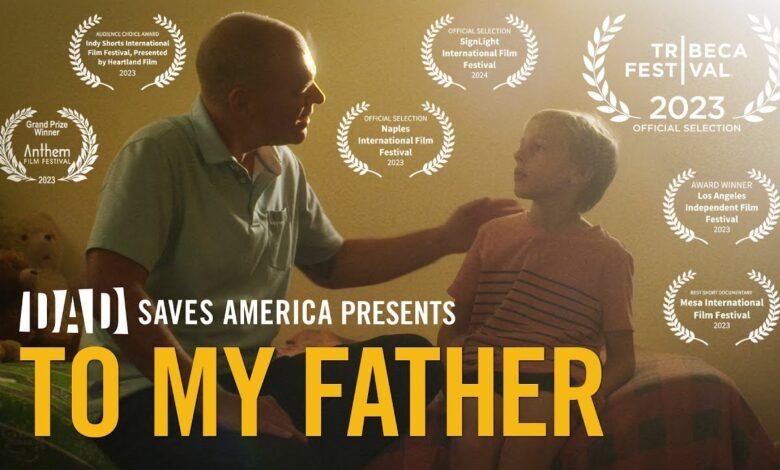
“My dad didn’t see me as deaf. He saw me as capable. And that was what was so beautiful about my dad.” — Troy Kotsur
In a world where many children are struggling to find affirmation, belonging, and support, To My Father emerges as a deeply moving reminder of the life-changing power of parental involvement, particularly the influence of a committed father.
The documentary tells the remarkable story of Troy Kotsur, the first Deaf man in history to win an Academy Award for Best Supporting Actor for his role as Frank Rossi in the acclaimed film CODA. Yet beyond the historic achievement lies a much deeper story, one that speaks to family, resilience, disability inclusion, faith, perseverance, and the transformative power of love.
At the heart of the documentary is not Troy’s Oscar victory. It is the story of a father who chose to see possibility where others might have seen limitation.
A Father Who Chose Connection Over Convenience
Growing up as a Deaf child in an overwhelmingly hearing world presented challenges that many people could hardly imagine. Yet Troy’s father, Leonard Kotsur, refused to allow those challenges to become barriers between him and his son.
Rather than expecting Troy to adapt entirely to the hearing world, Leonard adapted himself.
He learned American Sign Language. He studied his son’s language. He watched conversations among Deaf children so he could understand their world. He intentionally inserted himself into his son’s experiences, not as an observer but as a participant.
Troy recalls that his father never saw him as a problem to be fixed.
He saw him as a child to be understood.
That distinction changed everything.
Many parents, educators, and caregivers can learn from this profound lesson. Children flourish when they are accepted for who they are rather than constantly pressured to become someone else.
The Power of Presence
One of the most striking themes in the documentary is the importance of parental presence.
Leonard Kotsur was a busy police officer. Yet despite the demands of his profession, he consistently found ways to remain involved in Troy’s life.
When he noticed that Deaf children often felt isolated from one another, he created opportunities for connection by organizing a soccer team for Deaf children throughout Phoenix.
The impact extended far beyond sports.
The initiative became a community. Families connected with one another. Parents found support. Children discovered they were not alone.
What began as a father’s effort to help his son belong became a platform that strengthened many families.
This is one of the most significant messages of To My Father: involvement creates impact that extends far beyond the immediate family.
Inclusion Requires Action
The documentary challenges society’s understanding of inclusion.
Leonard did not simply advocate for inclusion. He practiced it.
After observing a hearing coach work with Deaf children, he decided to become a coach himself. He learned to sign while coaching baseball. Hearing children on the team gradually learned signs as well.
Without realizing it, he was creating an inclusive environment years before inclusion became a popular educational or social conversation.
His example reminds us that meaningful inclusion is not achieved through slogans, policies, or declarations alone. It is achieved through intentional actions that make people feel seen, valued, and included.
When Tragedy Strikes
Perhaps the most emotional part of the documentary comes when Troy recounts a devastating event that occurred shortly before his high school graduation.
His father was involved in a terrible accident caused by a drunk driver.
The injuries left Leonard paralyzed from the neck down.
For a man who had become the strongest signer in the family, the tragedy carried an additional heartbreak. He lost the physical ability to sign.
Many people would have viewed such circumstances as the end of a meaningful chapter.
Leonard viewed them differently.
Troy watched his father transform tragedy into purpose. Instead of surrendering to despair, he became an inspirational speaker and a respected community leader.
For Troy, this was perhaps the greatest lesson his father ever taught him.
The values his father had preached throughout his childhood were now being demonstrated under the most difficult circumstances imaginable.
The Gift of Seeing Ability
One of the most profound ideas presented in the documentary is the distinction between seeing disability and seeing potential.
Throughout his life, Troy’s father communicated one consistent message:
“You are capable.”
That message shaped Troy’s self-perception.
Rather than growing up believing his Deafness limited him, he grew up believing he could pursue his dreams.
That belief eventually carried him into theater, film, television, and ultimately to the Academy Awards stage.
The documentary invites viewers to ask an important question:
How many children become limited not by their circumstances but by the expectations imposed upon them?
Children often rise or fall to the level of belief communicated by the significant adults in their lives.
Lessons for Parents
The documentary offers several important lessons for parents:
1. Be Present
Children rarely need perfect parents. They need present parents.
2. Learn Their World
Whether it is sign language, sports, technology, music, or art, parents strengthen relationships when they intentionally engage with their children’s interests.
3. See Potential, Not Limitation
Children often become what they repeatedly hear and believe about themselves.
4. Build Community
Healthy families thrive within healthy communities. Leonard intentionally created opportunities for connection among Deaf children and their families.
5. Model Resilience
Children learn perseverance not merely through instruction but through observation.
Lessons to Note
For educators, school leaders, safeguarding professionals, and child advocates, To My Father reinforces several critical truths:
- Inclusion must be intentional.
- Every child deserves to be seen as capable.
- Family engagement significantly influences child outcomes.
- Community support strengthens resilience.
- Children’s unique needs should be embraced rather than minimized.
Faith, Patience, and Purpose
Toward the end of the documentary, Troy reflects on his long journey toward success.
There were moments when he believed his dreams were slipping away. There were years of sacrifice, disappointment, and uncertainty.
Yet he speaks about trusting God’s timing and remaining faithful through seasons that did not make sense.
His message is both simple and profound:
Do not become discouraged by delayed success.
Life unfolds in seasons.
What appears impossible today may become tomorrow’s testimony.
Final Verdict
To My Father is more than a documentary about a famous actor.
It is a story about fatherhood.
It is a story about disability inclusion.
It is a story about resilience.
It is a story about community.
Most importantly, it is a story about what happens when a child is deeply loved, consistently supported, and relentlessly believed in.
In an age where many fathers are absent physically, emotionally, or relationally, To My Father stands as a compelling reminder that a father’s involvement can shape destinies, build confidence, overcome barriers, and create legacies that endure for generations.
Reflection Question
What might change in the life of a child if every significant adult chose to see their potential before their limitations?
You can watch To My Father featuring Troy Kotsur for free on YouTube through the Dad Saves America channel. The documentary premiered on December 7, 2023, and has a runtime of approximately 23 minutes.